

Story
Follow The Perth Mint Gold Tour
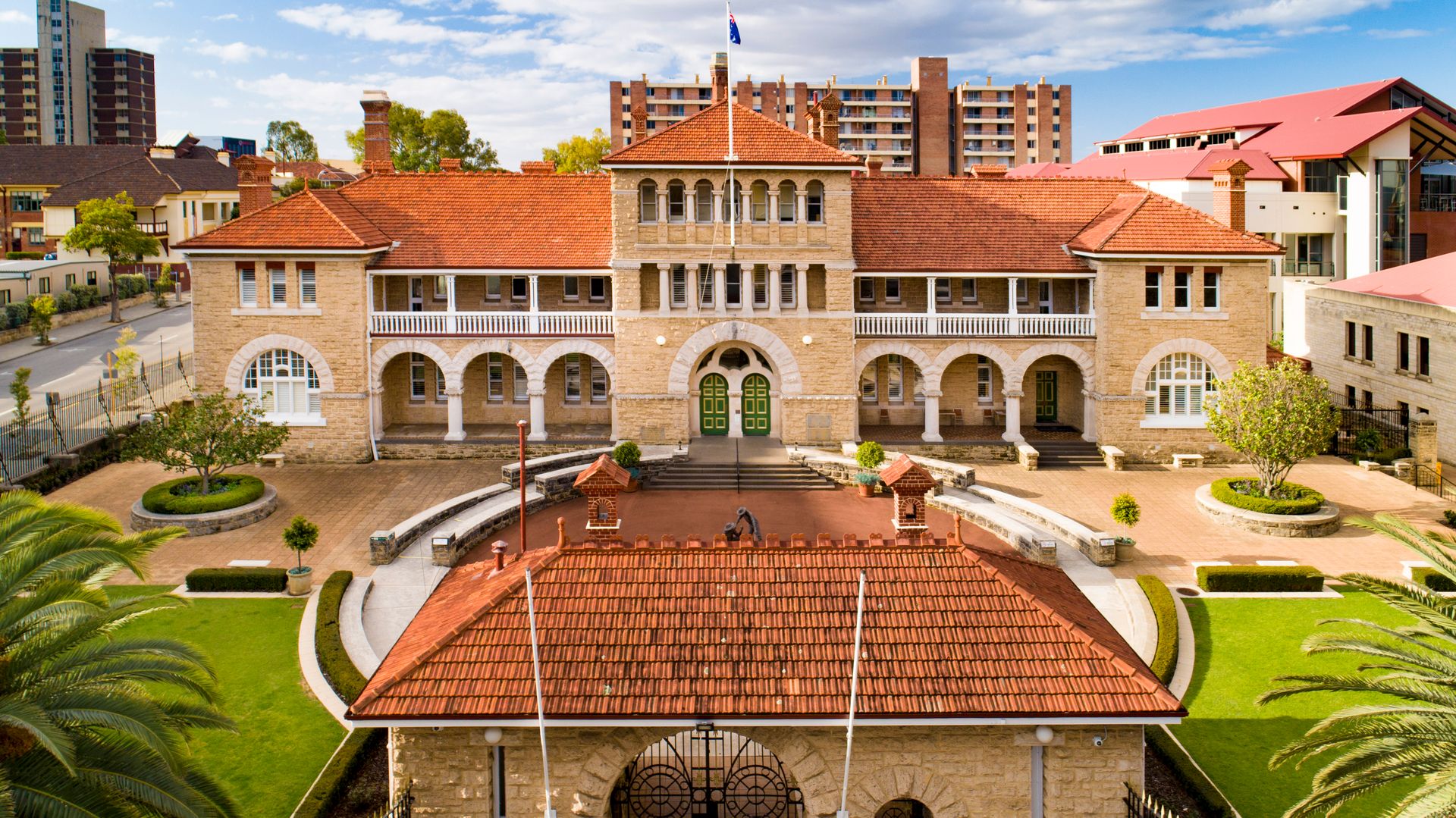
Australia's oldest operating mint
Please join your tour guide in the Forecourt out the front of the Mint at the time indicated on your ticket.
Welcome to The Perth Mint
Kaya! Wandjoo! Hello and welcome in language of Aboriginal Nyoongar people.
The land The Perth Mint operates on holds strong significance for Whadjuk Nyoongar people, the traditional custodians of this region for over 45,000 years. Crossed by established bidi (tracks) that connected swamps, rivers and other important sites across Boorloo (Perth), Nyoongar people likely used this land for camping and hunting.
In 1829 the arrival of British colonists pushed the Whadjuk Nyoongar from this area. Colonial settlers drained resource rich swamps and divided the land to establish market gardens, parks, and lots for housing and other development, like The Perth Mint.
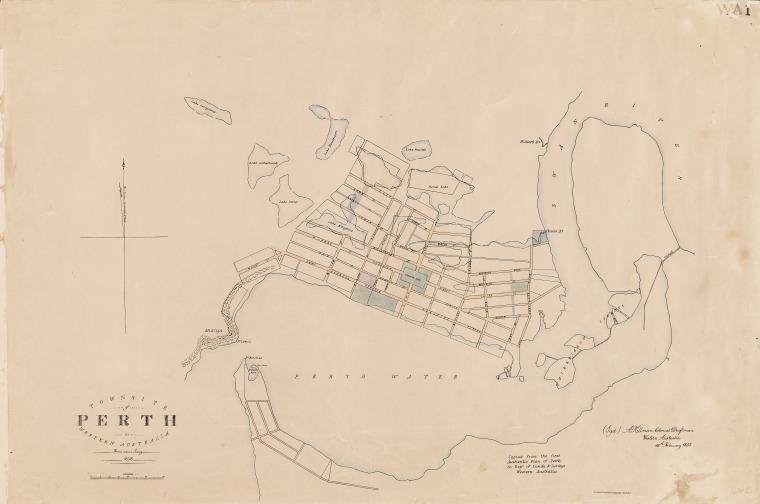
Townsite of Perth in Western Australia, 1838, signed A. Hillman, Colonial Draftsman
Credit: State Library of Western Australia <b1805940_1>
Acknowledgement of Country
As a tribute to the continuing connection of Aboriginal Peoples to this land, as well as an acknowledgement of its use for the activities of The Perth Mint, a mosaic, designed by proud Whadjuk-Yuet-Ballardong man and local artistKevin Bynder was unveiled in 2022.
Titled 'Kwobidak Boodja' meaning 'Pretty Country', the lower section of the artwork depicts the gold rush days with images of hills, water, sand, and golden nuggets. The upper part of the mosaic includes shades of gold and silver - depicting coins.
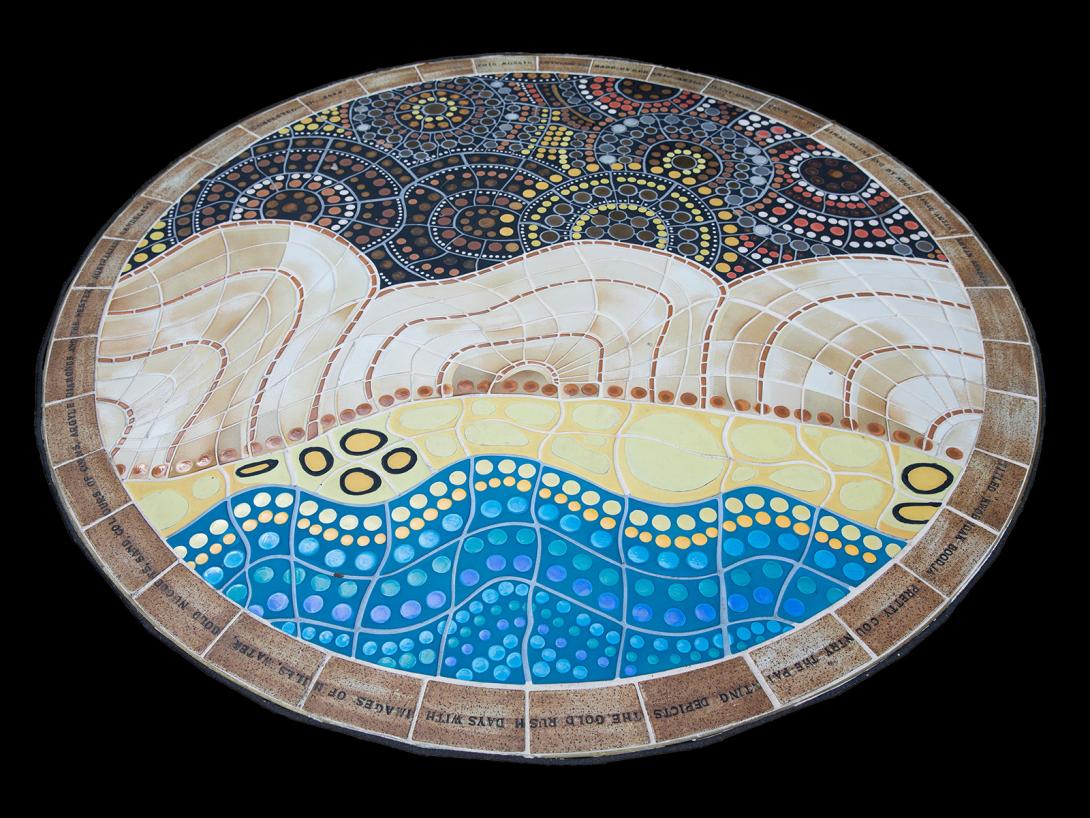
'Kwobidak Boodja' by Kevin Bynder
Credit: The Perth Mint
Important courtesy and safety procedures
Before we begin the tour, please read the following information regarding your safety.
• If you feel unwell or sustain an injury whilst on-site, please inform our staff immediately. We will have one of our first-aid officers provide you with assistance.
• Running is not permitted while you are on our premises.
• This is a non-smoking venue. That includes e-cigarettes and vapes. If you would like to smoke, you can do so, outside of the main gates.
• Toilets are available inside the Exhibition area (upstairs), as well as at the front of the heritage building next to the main entrance gates.
• There is a universal access toilet (which includes baby changing facilities) located in the shop.
• Lastly, please set all mobile phones to silent during the tour.
Gold discovered in Western Australia!
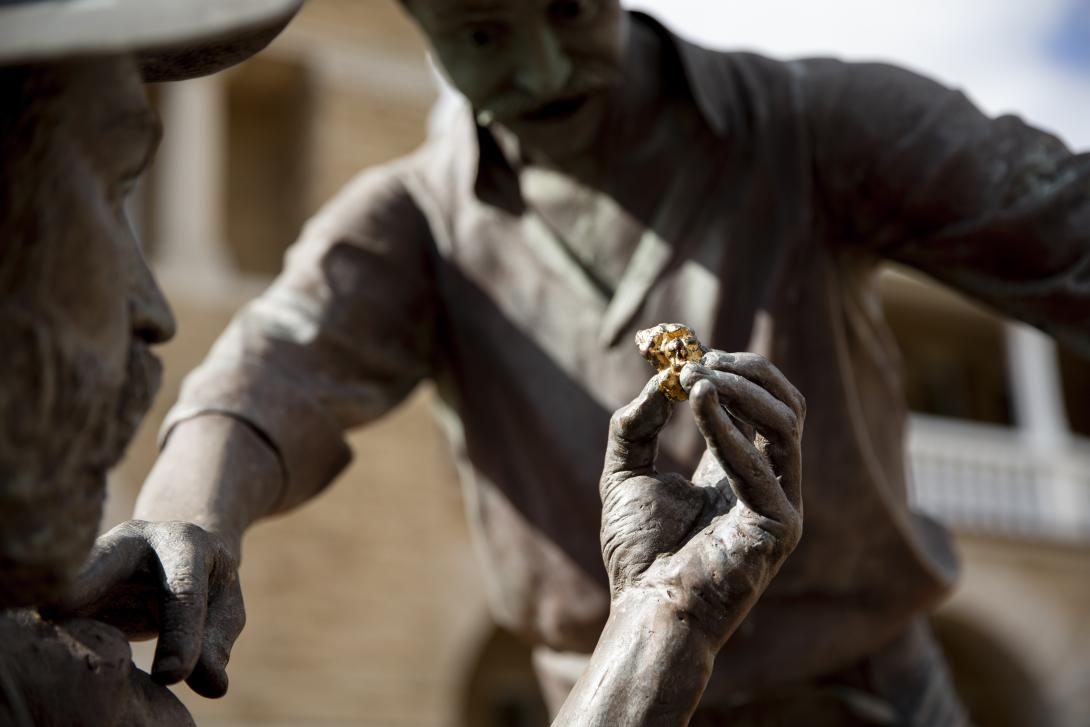
The history of the Western Australian gold rush, and the establishment of The Perth Mint, can be traced back to the two men depicted in the statue in the centre of our Forecourt - Arthur Bayley and William Ford.
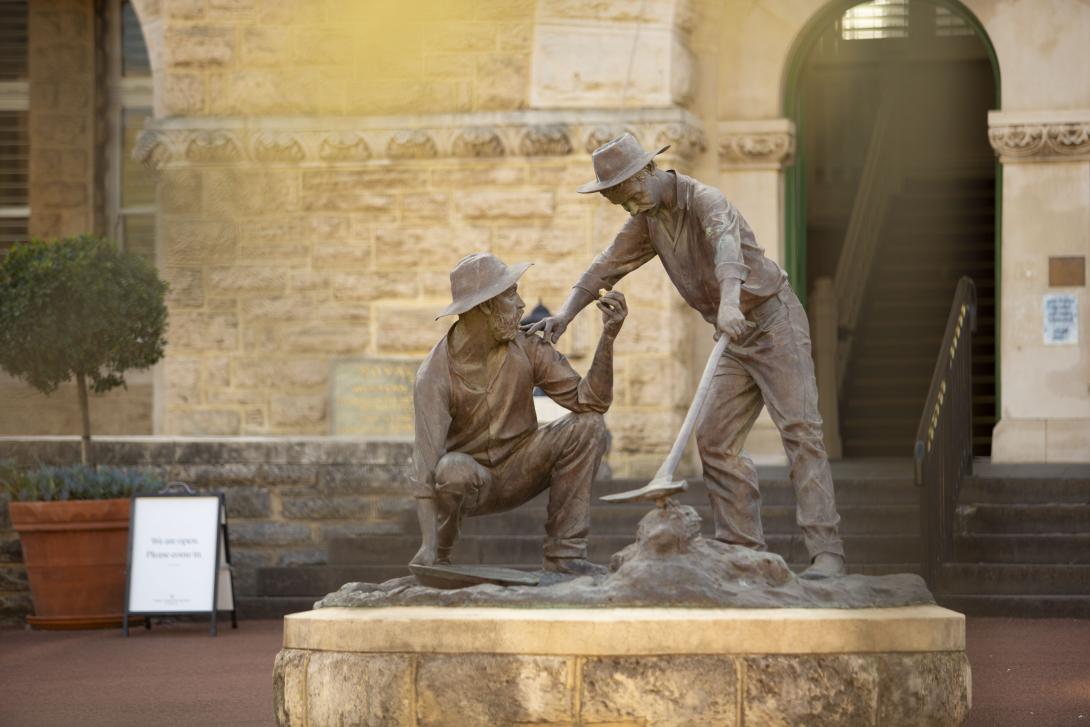
'The Strike' by Greg James
Credit: The Perth Mint
In June 1892 Bayley and Ford set out on a prospecting expedition in the remote east of Western Australia. Knowing the perils of the desert, they waited for rain then set out with eight weeks supply of food. While camping at a natural well several weeks into their expedition, they left their horses grazing and set off early one morning specking for gold across the flats.
The bronze statue, ‘The Strike’, by Western Australian sculptor Greg James captures the moment Ford picked up the pair's first gold nugget, weighing a modest half ounce (15.5 grams). Later Bayley told newspapers that “after that we started picking up gold all the time, getting about 200 ounces (6.2 kilograms) in five or six weeks.”
Credit: The Perth Mint
The two men kept their find a secret for as long as possible but when Bayley struck a gold reef and pulled out a 1.4 kilogram piece of gold, they decided it was time to report the find. Other prospectors had been around the area, later named Coolgardie, and Ford and Bayley wanted to secure the rights to mine the area.
On 17 September 1892 Bayley rode into Southern Cross carrying a total of 17.2 kilograms of gold! He declared the find to the local mining warden, sparking the Western Australian gold rush to truly begin.
Over the next 70 years Bayley's Reward Mine produced over 8,700 kilograms of gold!
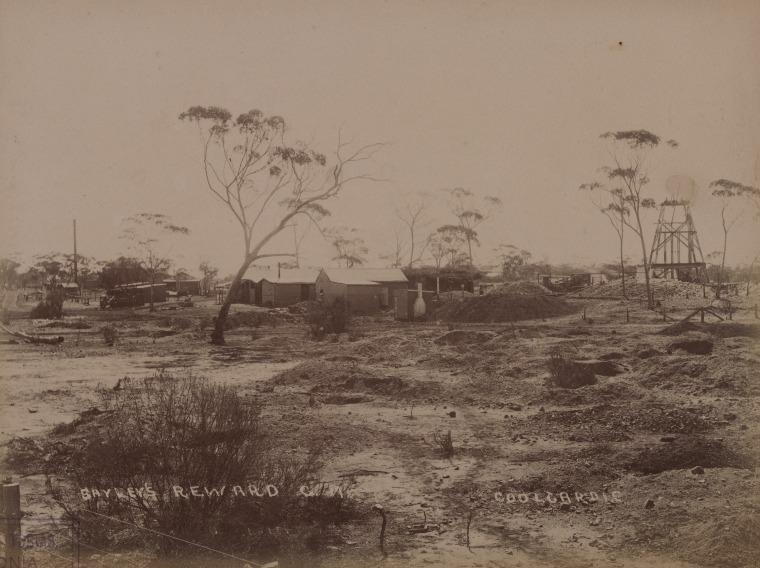
Bayley's Reward Gold Mine, Coolgardie, circa 1895
Credit: Hemus & Hall, State Library of Western Australia <b1903271_2>
Prospecting in the desert
In the five years after Arthur Bayley and William Ford's discovery of gold in Coolgardie in 1892, the population of Western Australia exploded from 60,000 to 160,000. Prospectors came from the East Coast of Australia and around the world in their search for wealth erecting an assortment of tents, brush humpies and blanket shelters.
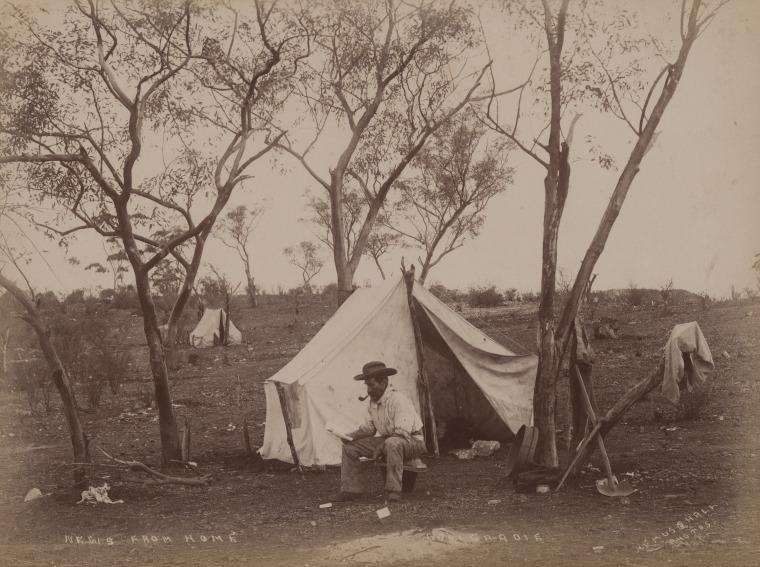
News from home, Coolgardie, circa 1895
Credit: Hemus & Hall, State Library of Western Australia <b2251697_2>
Life for early prospectors was harsh – the region averaged less than three centimetres of rain a year!Without a plentiful water supply, they adapted to use wind to extract gold from the soil, in a process called dryblowing. When soil is released from a height, wind blows dirt particles away while denser gold falls to the ground.
Doing this by hand was laborious so shakers and specialised dryblower machines, that incorporated a pair of bellows to help blow dust away, were soon on the market. With so many prospectors flocking to Western Australia's goldfields, the clouds of dust must have been enormous!
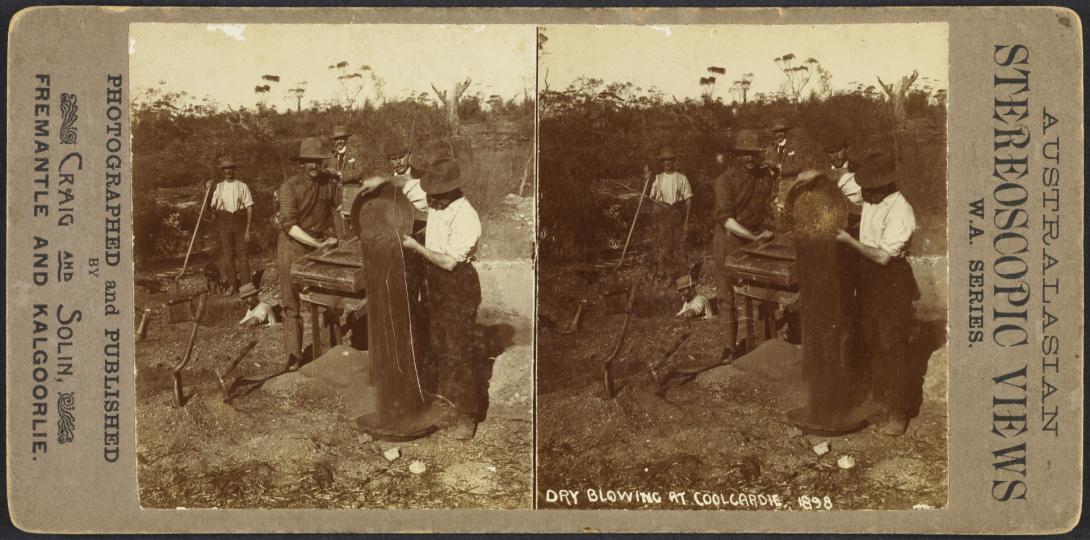
Stereoscope card, Dry Blowing at Coolgardie, 1898
Credit: Craig & Solin, State Library of Western Australia <b2236313_2>
A Perth Branch of The Royal Mint
The British Government had established branches of their Royal Mint in Sydney and Melbourne in response to earlier gold rushes on the east coast of Australia. Western Australian gold had to take the extremely difficult and risky journey right across the country to be refined and turned into sovereign coins, the circulating currency of the day. This meant that profits from Western Australian gold were lost to the Eastern States! Much gold was also being shipped out to Britian directly from the mines.
To keep gold revenue in Western Australia the then Premier, Sir John Forrest, petitioned the Colonial Office in London to build a branch of the Royal Mint in Perth. Approval was granted and on 23 September 1896 the foundation stone was laid by Forrest.
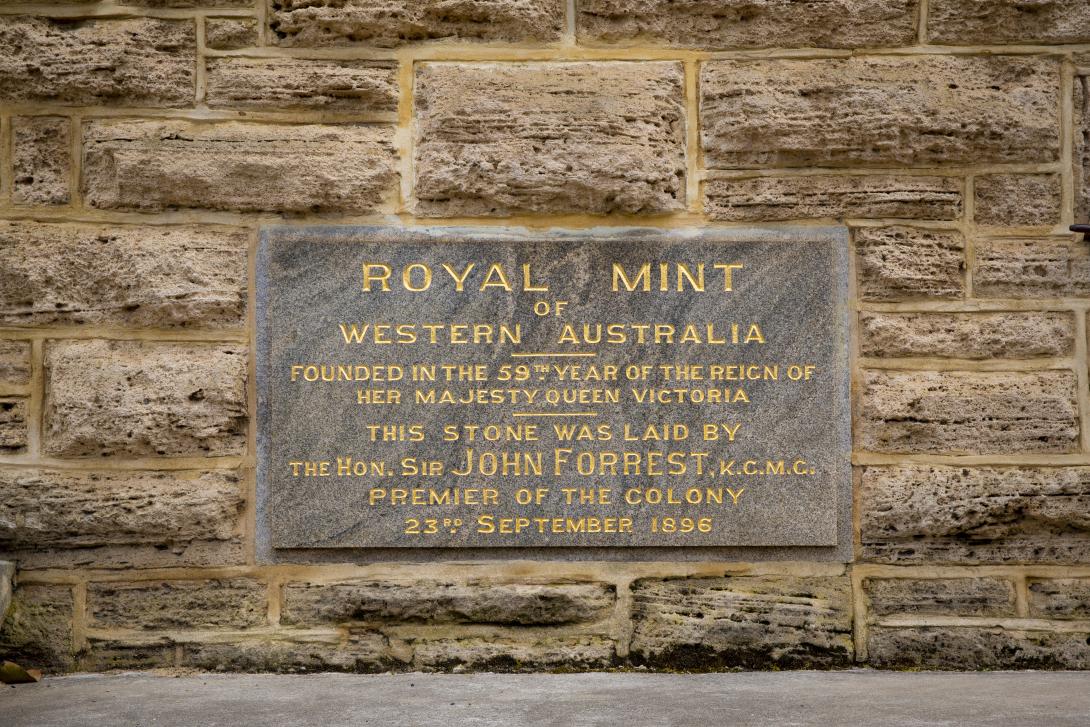
The Perth Mint Foundation Stone
Credit: The Perth Mint
The Daily News reported that Forrest addressed the 'large and fashionable gathering' saying that 'the day must be regarded as a red-letter day in the history of the colony...he believed that Western Australia would soon be one of the greatest gold-producing [regions] in the world.' - a prediction that has turned out to be accurate to this day.
We remained a branch of Britain's Royal Mint until 1 July 1970 when our ownership transferred to the Western Australian State Government and we were renamed The Perth Mint.
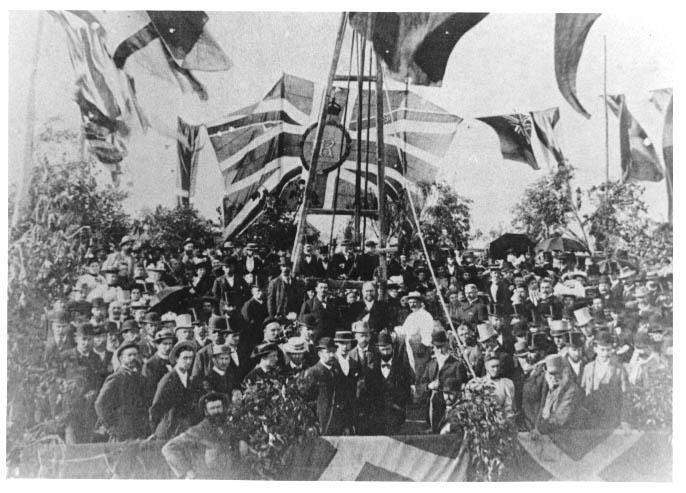
Foundation Stone ceremony, 23 September 1896
Credit: The Perth Mint
Main Administration Building
The Perth Mint was designed by George Temple Poole, the Chief Government Architect at the time. Poole's design reflects imperial power as well as colonial pride, a clear statement of the huge impact gold had made on the colony's fortunes.
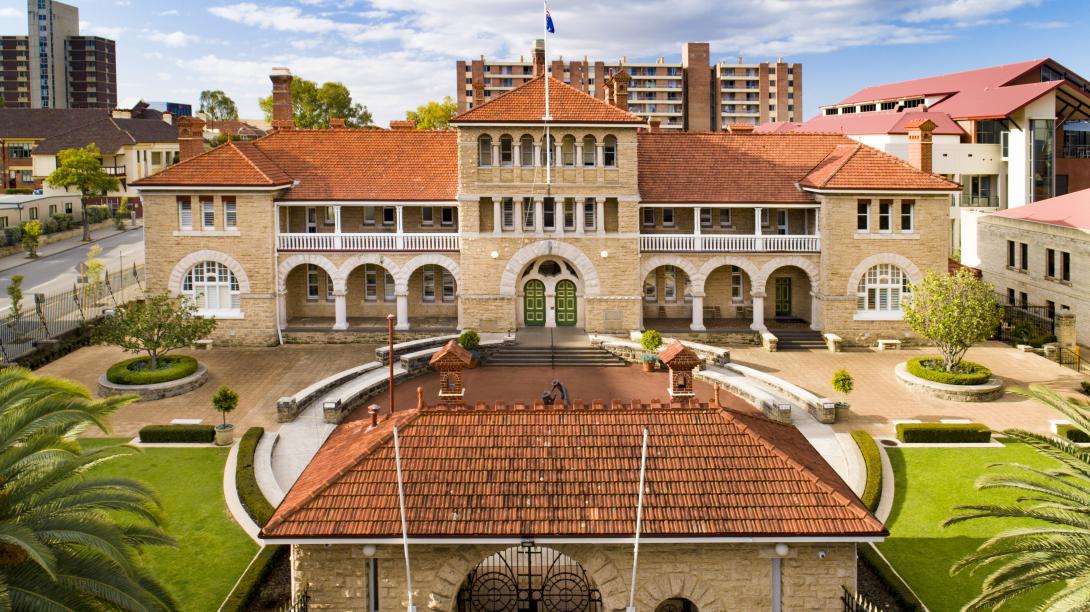
Credit: The Perth Mint
While the roof tiles were imported from Marseilles in France, the rest of the building was mostly constructed using local timbers and bricks. The facade features two types of local limestone; the darker limestone is from Cottesloe Beach while the lighter limestone, used in the columns and arches, was quarried at Rottnest Island.
On 20th June 1899 the Perth Branch of The Royal Mint was officially opened by Governor Sir Gerard Smith. Premier John Forrest was asked to switch on the machinery in the Coining Department before distinguished guests sat down to a sumptuous lunch in the Assay Rooms.
Gold deliveries
Tonnes of gold were delivered to the Mint through our main entrance gates, usually in bulk transports. When the railway was built a special bullion railway carriage was attached to scheduled trains from Kalgoorlie. The carriage was fitted out with a central strongroom as well as quarters for the police or bank officer escorts. The escorts were locked in the van with a supply of beer and sandwiches for the rough overnight journey.
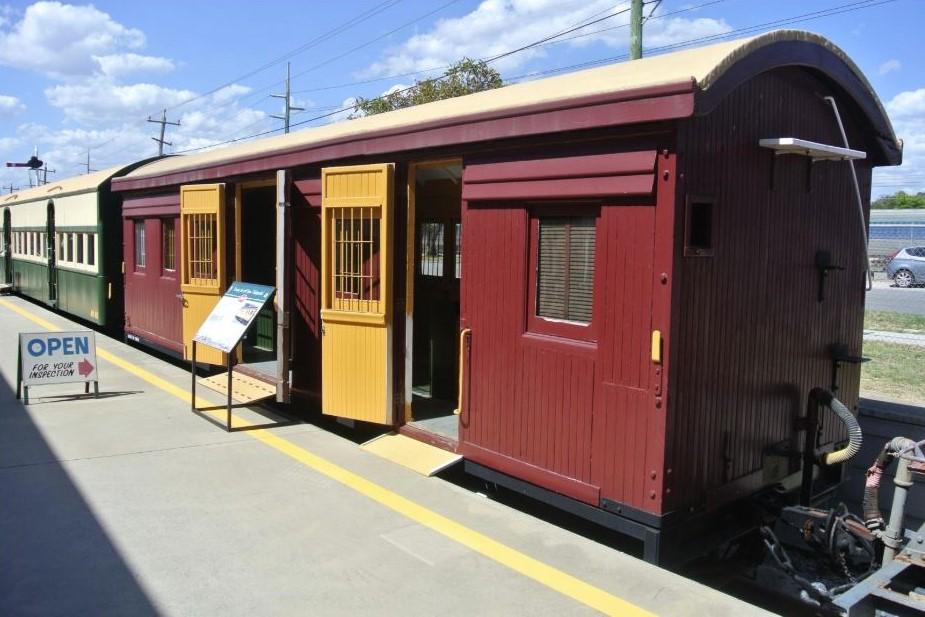
Bullion Van VY 4999, one of three bullion vans used to transport gold in Western Australia. Currently on display at the Railway Museum, Bassendean.
Credit: Rail Heritage Western Australia
When the train arrived at Perth Station the next morning the gold was transferred to horse-drawn wagon. The gold received an armed police escort the few blocks to the Mint.
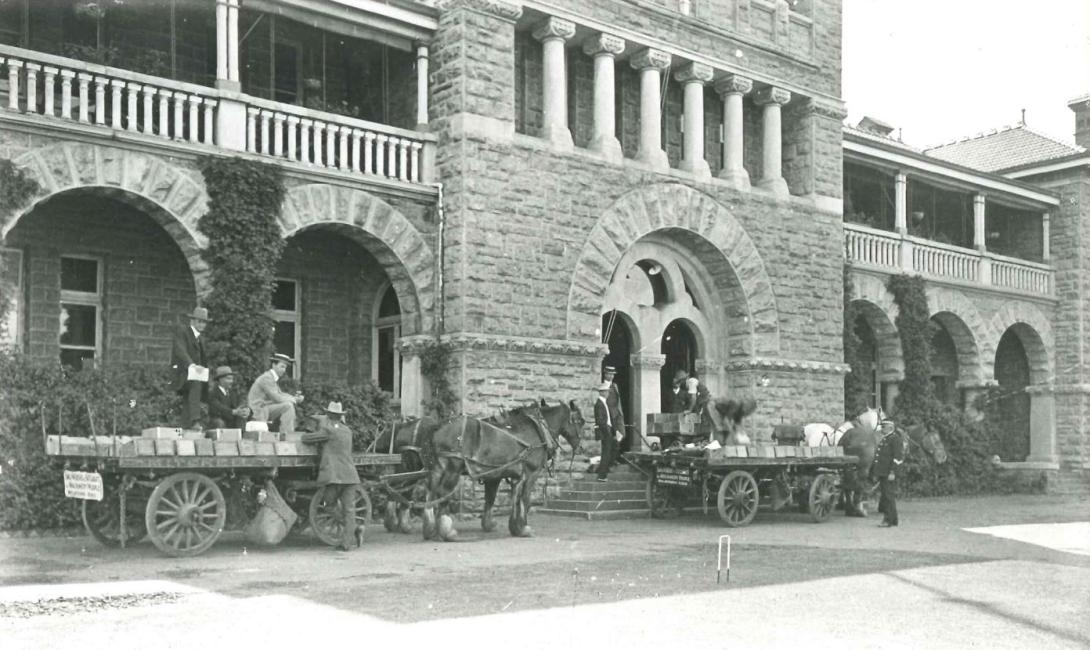
Arrival of gold escort at the Royal Mint, Perth Branch, circa 1920
Credit: The Perth Mint
Bank officials monitored the unpacking and weighing procedures closely. They watched as deposits were locked in a wooden bullion cart and sent directly to the Melting House to start the refining process. You can see the historic tall chimney of our original Melting House above the western end of the main administration building.
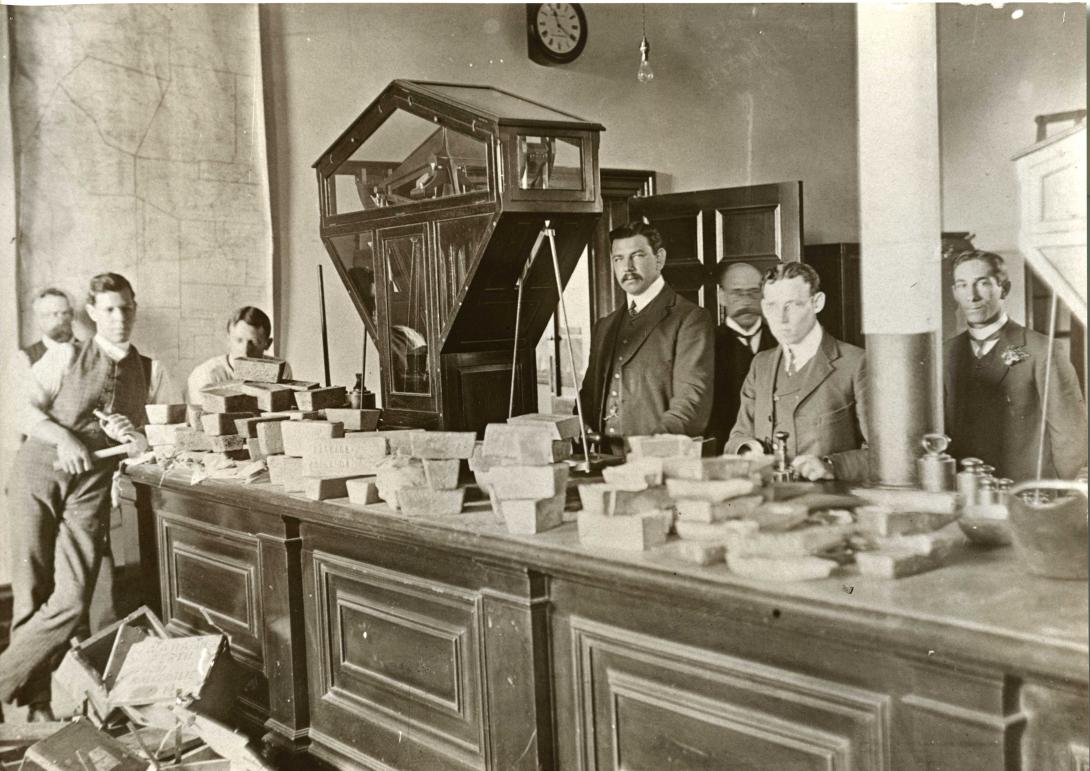
Mint officers weigh £120,000 worth of gold, 1907
Credit: The Perth Mint
Sovereigns for the Empire
The Perth Branch of the Royal Mint was established for the purpose of refining Western Australia's gold and turning it into the circulating currency of the day - gold sovereign and half sovereign coins.
Today, it's hard to imagine a time when something as rare, valuable and beautiful as solid gold was used for everyday coins! But for many years the gold sovereign was the most widely circulated gold coin in the world.
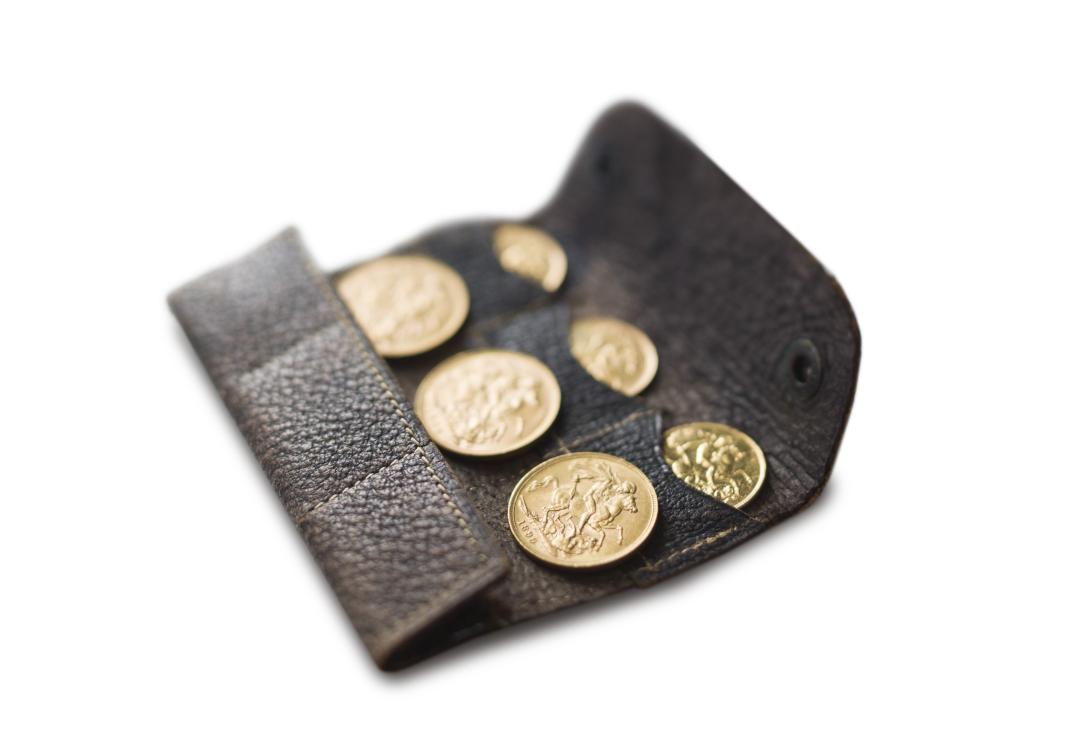
Sovereign purse containing Perth Mint gold sovereigns and half sovereigns
Credit: The Perth Mint
The gold sovereign issued following the introduction of the Coinage Act 1816 had a value of one pound sterling. Each sovereign was made to strict specifications. It had to weigh 7.98 grams and contain exactly £1 worth - 0.2354 troy ounces (7.32 grams) - of 22 carat gold.
Originally, Perth was expected to produce a million sovereigns per year but in 1901, in only our third year of operation, we minted almost three million!
Between 1899 to 1931, The Perth Mint manufactured 106 million gold sovereigns and 735,000 half-sovereign coins. In 1931 Britain abandoned the gold standard and sovereign coins were no longer minted.
Pennies and cents
In late 1940s there was a nation-wide shortage of copper coins. In December, newspapers reported that “publicans have requested hundreds of pounds worth of copper coins, due to the increased price of beer."
The Commonwealth Treasury sent The Perth Mint an urgent request to mint pennies as the Melbourne Mint did not have capacity. In 1940 numbers of experienced staff were fewer as no coining had been done in Perth for ten years. Also, some staff were away on active service in the Second World War. However, The Perth Mint meet the challenge and produced 3,940,000 coins to fulfil the order. The existing machinery, designed for softer gold, was adapted to deal with tougher copper. On 10 July, 1941, The West Australian newspaper reported the following:
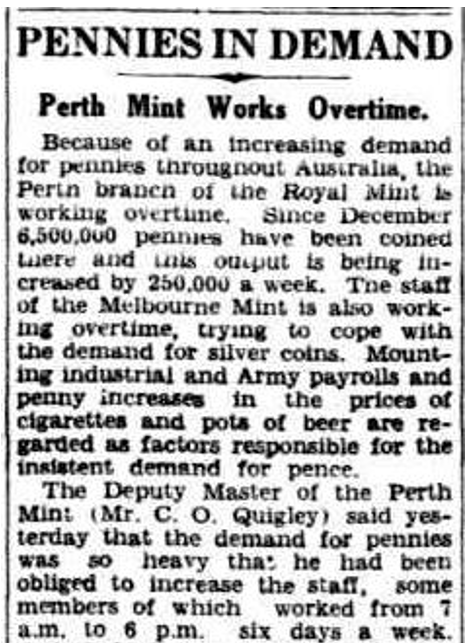
Credit: Reproduced courtesy of the National Library of Australia
Then in October 1941 Treasury requested The Perth Mint produce half pennies due to an upcoming increase in postage rates which would increase demand. We continued to produce pennies and half-pennies until 1964, minting a total of 438 million pennies and 256 million halfpennies.
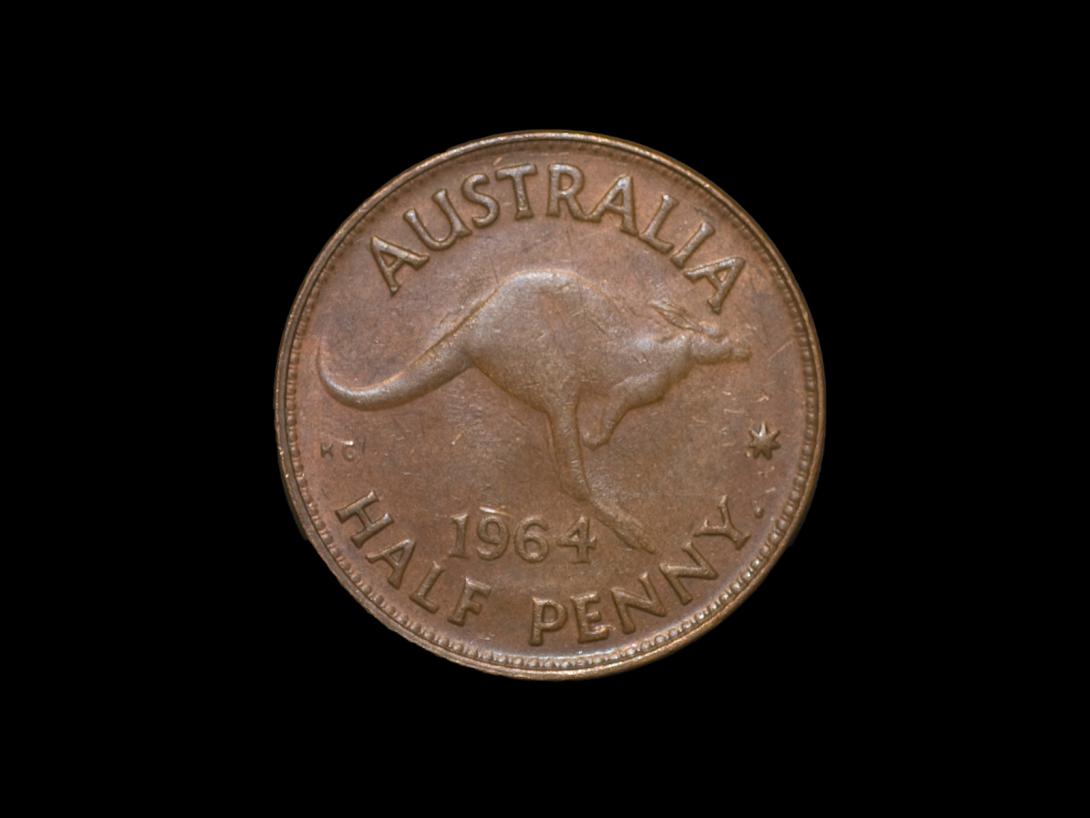
1964 Perth Mint half penny
Credit: The Perth Mint
In 1965 the Royal Australian Mint in Canberra was opened as Australia's national mint. This was to lead the changeover from British Imperial pounds, shillings and pence to Australian decimal currency. The Perth Mint assisted the Royal Australian Mint by producing the new one and two cent copper coins required. From 1964 until 1984, we produced 26 million one cent coins and 829 million two cent coins!
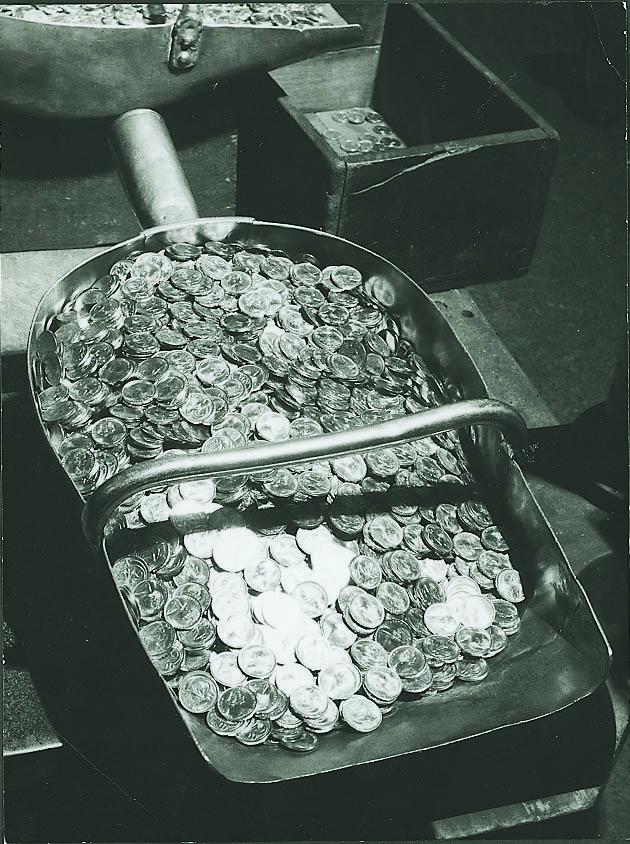
A scoop full of two cent coins at The Perth Mint
Credit: The Perth Mint
Becoming Australia's precious metals mint
By 1984 the production of all of Australia’s circulating currency had been handed to the Royal Australian Mint. An ambitious project was launched to modernise The Perth Mint and reinvent it as Australia's precious metals mint.
Our first gold bullion coin program was launched in 1987 – called The Australian Nugget - which commemorated famous gold nuggets found in Australia. The series was a worldwide success.
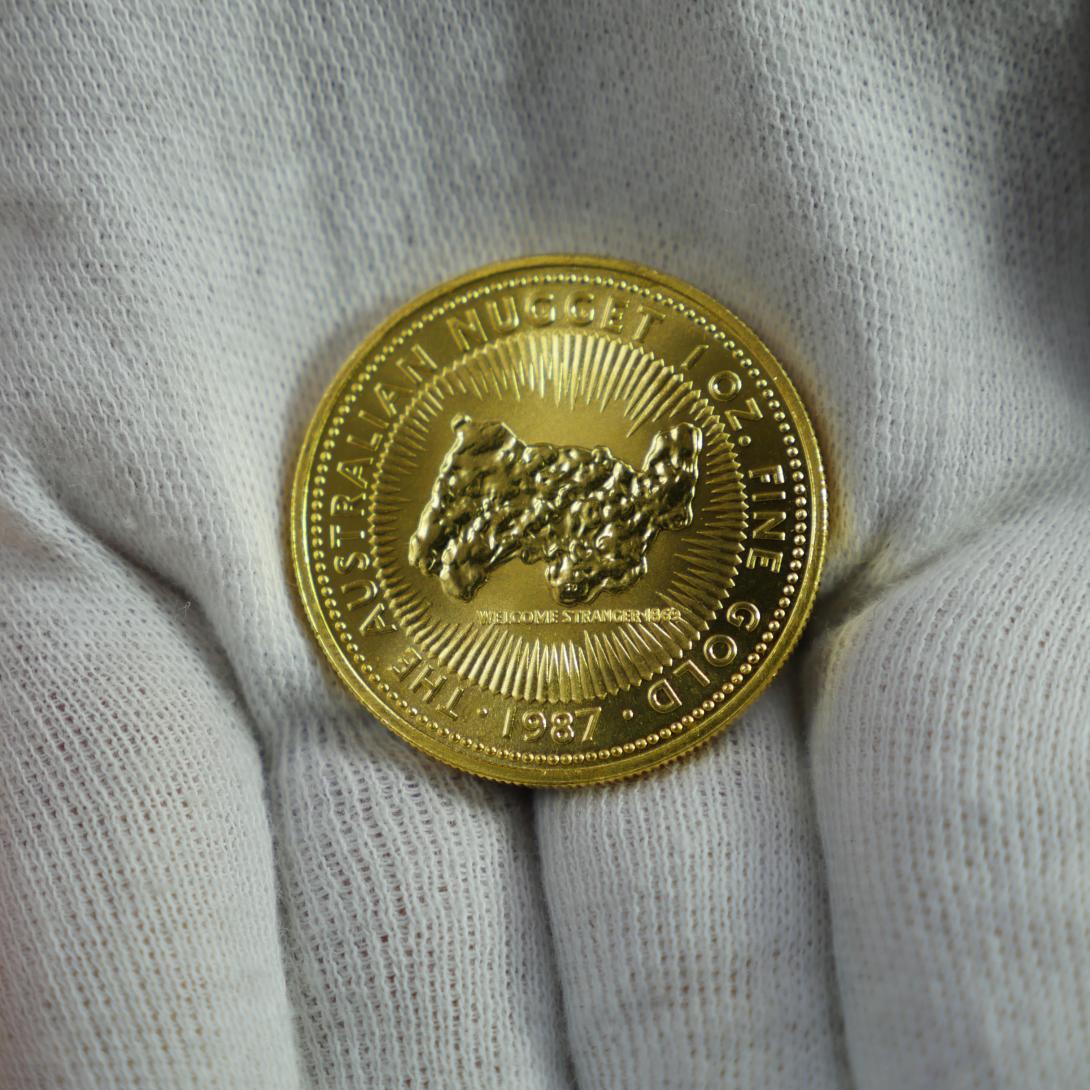
1987 One ounce 'Welcome Stranger' Australian Nugget Gold Bullion Coin
Credit: The Perth Mint
Our legendary nuggets
The Perth Mint has committed to preserving and displaying many impressive Australian nuggets and specimens still in existence. However, many early finds were sold and melted down by struggling prospectors eager to reap the rewards of their toil!
But we can tell you the remarkable stories of two of Australia’s record-breaking gold nuggets.
The Welcome Stranger: Discovered 1869 in Moliagul, central Victoria
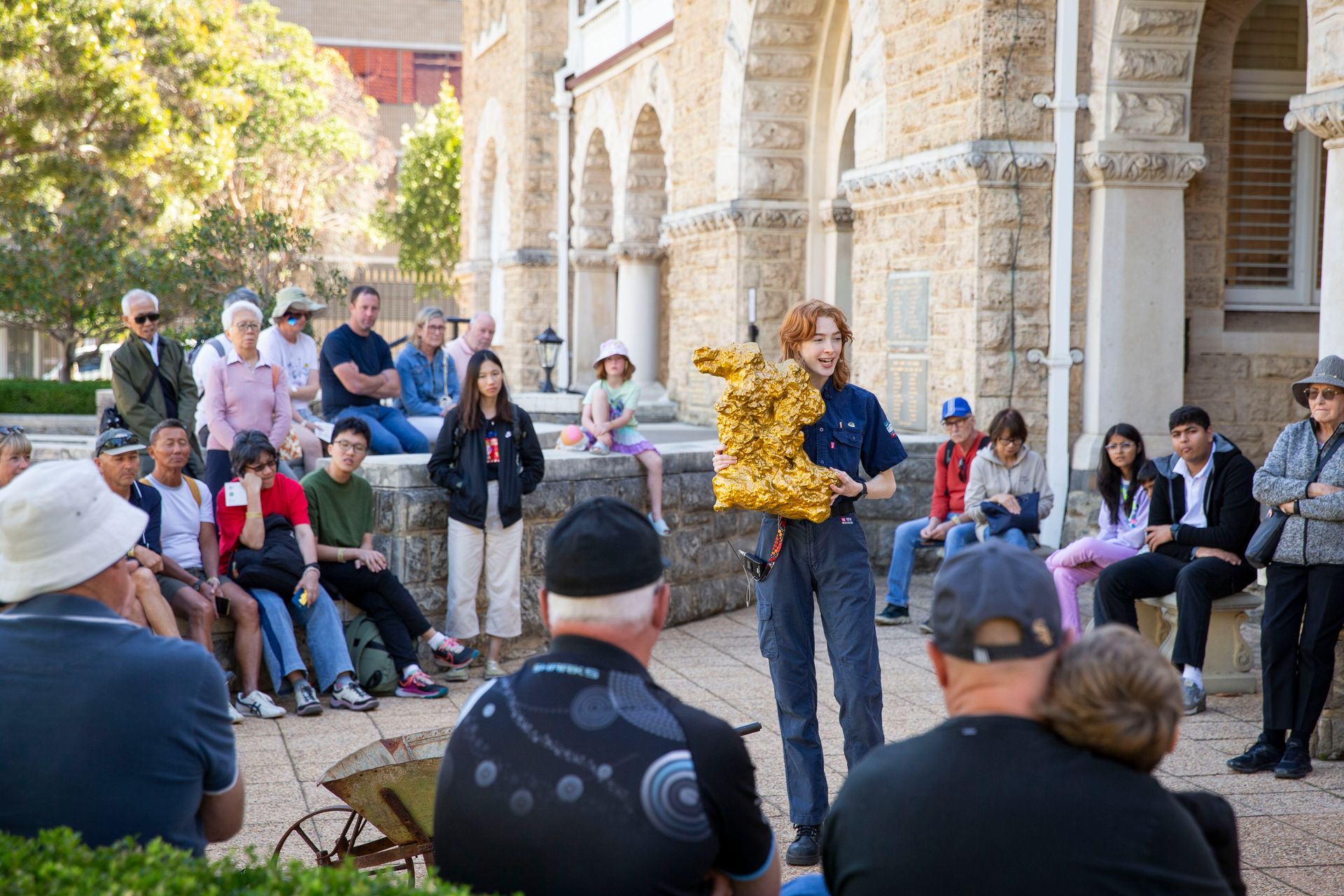
Credit: The Perth Mint
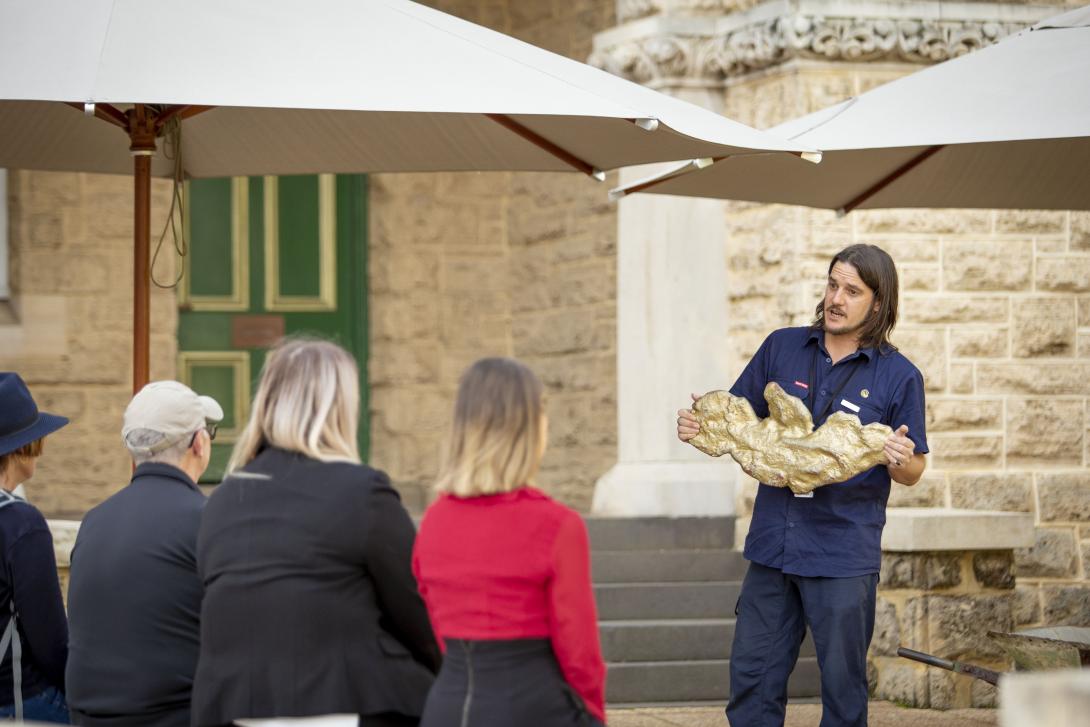
Celebrated as the largest gold nugget ever found, the ‘Welcome Stranger’ was discovered on Friday 5th February 1869. It was unearthed just three centimetres below the surface by Cornish miner John Deason and his prospecting partner, Richard Oates, while digging around the roots of a stringybark tree.
The two men managed to cart the nugget back to Deason’s hut where they sat up all night breaking it free from around 30 kilograms of quartz. No one left the house until the following Monday when Deason, dressed in his best suit, visited his neighbours and invited them to a party at his house that evening.
During the party the ‘Welcome Stranger’ was kept hidden under a cloth. As guests prepared to leave Deason whipped the cloth off and said ‘Don’t go home, boys. That’s solid gold and I want you to stay tonight and escort it to the bank at Dunolly tomorrow.”
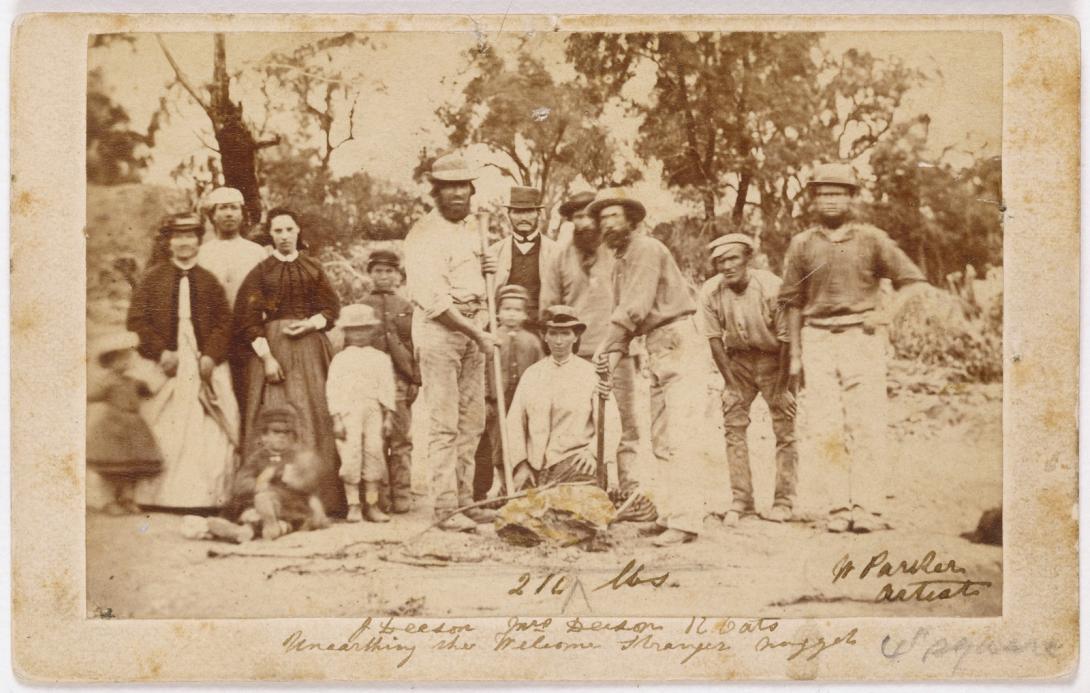
Unearthing the Welcome Stranger Nugget, 1869
Credit: W. Parker, State Library of Victoria <H13298>
When they got the nugget to the bank it was much too large for the scales! The local blacksmith had to break it into pieces before its official weight was recorded as 2,302 troy ounces. That’s over 71kilograms of solid gold!
Deeson and Oates split the fortune of nearly £10,000, which at today's gold price is almost AUD 10 million.
Credit: The Perth Mint
The largest nugget ever discovered in Western Australia was found by a 16-year-old boy named Jimmy Larcombe in January 1931. Jimmy and his dad, an experienced prospector, were working the Larkinville alluvial goldfield near Coolgardie.
At about 2.30pm on 15 January, young Jimmy’s pick hit the nugget. Realising immediately what it was, he called his dad over. The pair managed to lever the nugget out of the ground while fellow prospectors quickly swarmed around them to catch a glimpse of their incredible find.
With no large scales in Larkinville, they took the nugget to the local store and weighed it against a 60lb (27kg) bag of sugar, which it swung easily into the air!
The next morning it was officially weighed at the National Bank in Kalgoorlie as 1135 troy ounces, an impressive 35.3kg - Western Australia’s largest gold nugget! Such a sensational find during The Great Depression set off a new gold fever in Western Australia.
The Larcombe’s named the nugget the ‘Golden Eagle’ as it resembled a bird with outstretched wings. They sold the nugget to the State Government of Western Australia for £5,438.
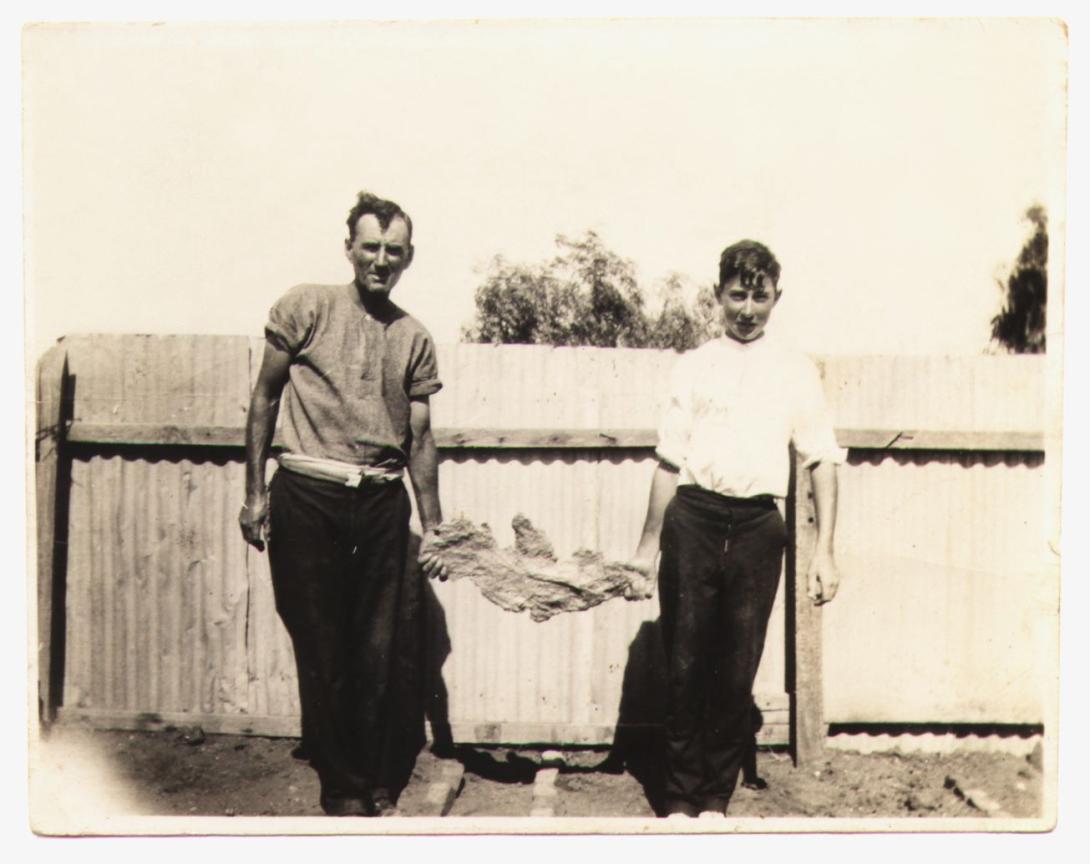
Jim Larcombe Senior and 16 year old Jimmy Larcombe holding the 'Golden Eagle' nugget, 1931
Courtesy: Dianne Russell
The Larcombe’s accompanied the nugget on a national tour of the nugget organised by the State Government. The nugget was displayed at schools and local halls. Unbelievably it was casually moved from place to place just wrapped in blue cloth and sitting in an open basket in the back seat of a car with only one police officer to guard it!
Sadly, the State Government cancelled plans to exhibit the nugget overseas, opting instead to boost state revenue during the depression era by selling it the Commonwealth Bank for £6,520. The ‘Golden Eagle’ was brought to The Perth Mint, broken into pieces and melted down in our original Melting House where gold pour demonstrations are now held for visitors.
The Larcombe’s invested the fortune the nugget had brought them in true Aussie style - they purchased a pub in Boulder City, next to Kalgoorlie. They changed the name from The Terminus Hotel to The Golden Eagle in honour of their famed find.Unfortunately, the iconic hotel, which was one of the closest to the Golden Mile, was damaged in an earthquake in 2010 then burnt down in 2012.
Please follow your tour guide inside the Mint and into the Gold Exhibition to view The Perth Mint’s record breaking One Tonne Gold Coin.Please navigate to the ‘Follow The Perth Mint Gold Tour – One Tonne Gold Coin’ tab when you are ready.