

Story
Live Gold Pour Demonstration
Marvel at the beauty of molten gold
The Perth Mint
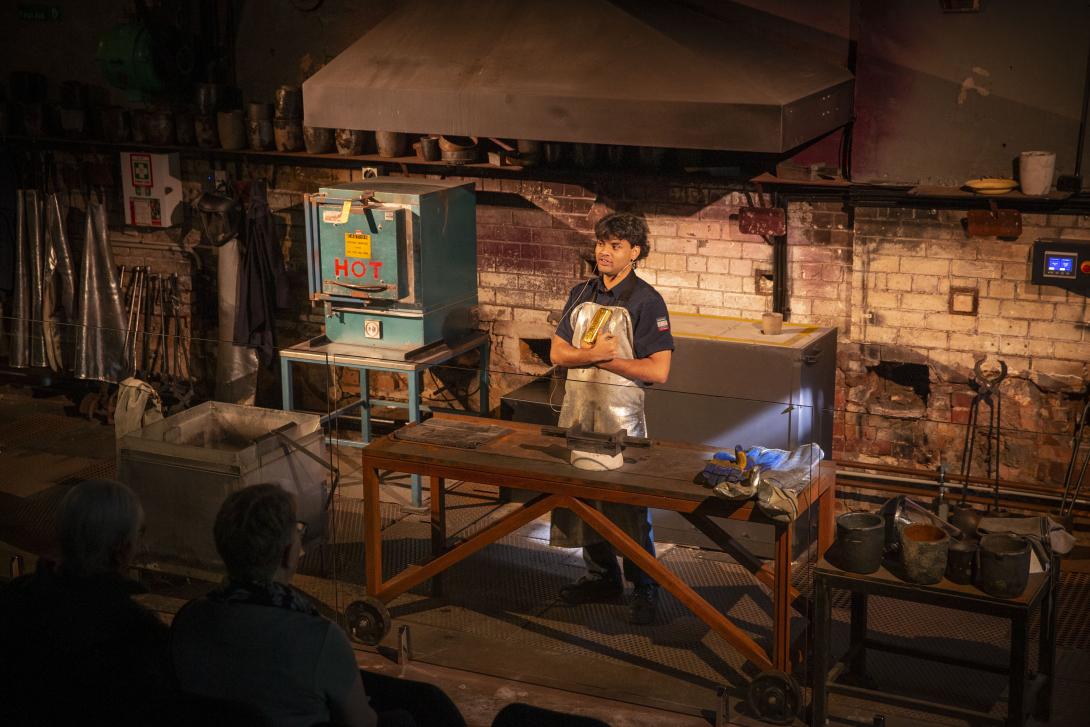
Please make your way to the Mint’s original Melting House to watch a live gold pour. Please leave seats in the front row available for visitors with accessibility needs.
Important courtesy and safety information
Before the demonstration starts, please read the following information regarding your safety:
• Please turn all mobile phones to silent.
• Please turn the flash on your phone or camera off as the light can distract our gold pourer when handling hot molten gold
• Please hold devices in front of you, not above your head, so everyone can see
• Please remain seated during the demonstration
• Please note, the backs of the seats fold down very easily, so it’s best not to lean on the seat in front of you.
• In case of an emergency please remain calm and proceed through the door from which you entered and turn left. Your fire warden will guide you on how to exit the building safely.
Original 1899 Melting House
For 91 years, up until 1990 - all the gold we received at the Mint came into this very room.
Thousands of tonnes of gold were wheeled through the doors you just walked through! It was melted down in one of the fifteen furnaces that used to line the back wall.
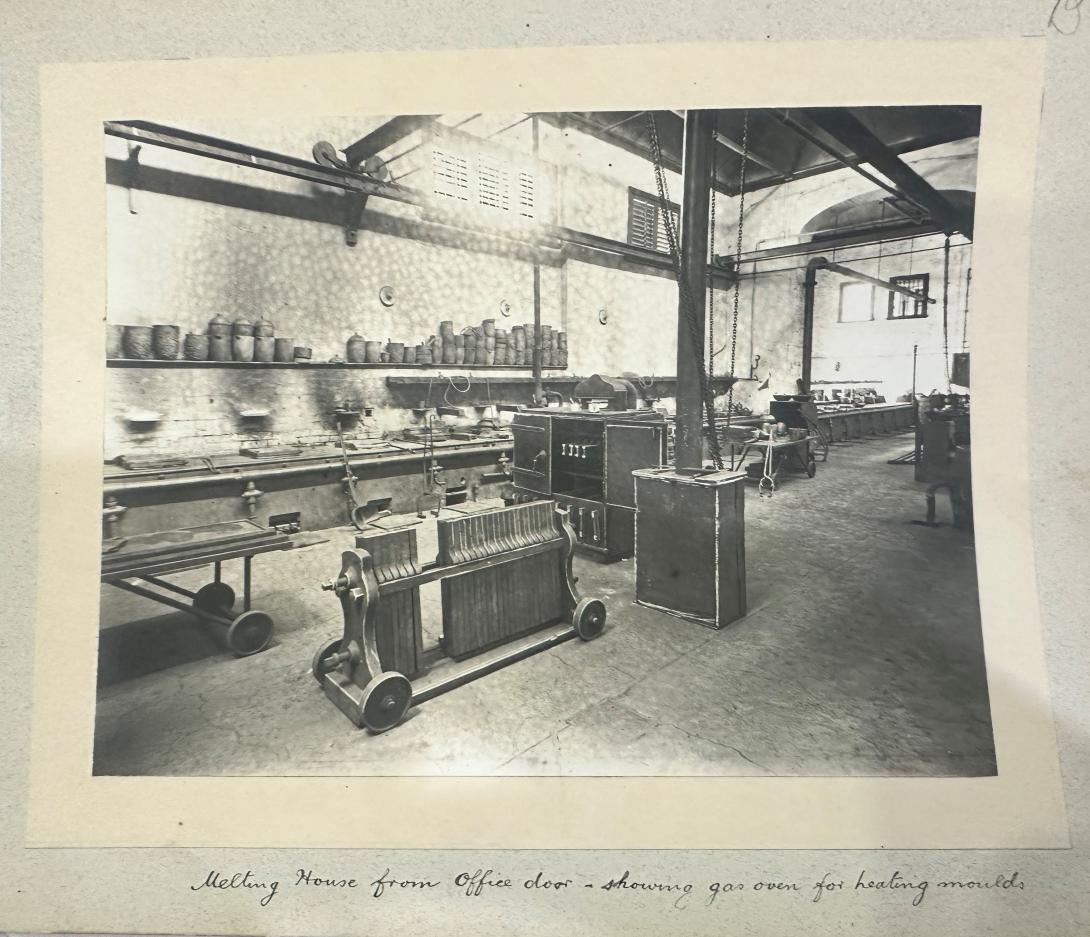
The Perth Mint Melting House, 1908
Credit: The Perth Mint
If you think this is a small room to have dealt with tonnes and tonnes of gold, you're correct! Originally, the Mint was designed to produce one million sovereign coins a year.
When the Government realised just how much gold there was in Western Australia, they increased the expected yearly production to three million sovereigns.
But construction on the Mint was already well underway! Internal walls were adjusted to squeeze in more equipment, but space was tight in here right from the start.
By 1902, we were processing so much gold that we extended the Melting House. Two adjoining rooms - the area behind the windows to your right - were combined and another 17 furnaces installed. This allowed us to increase production to between 4-5 million sovereigns a year!
Gold deliveries
Because of the huge distance between the goldfields and Perth, we received gold in bulk deliveries. It was more economical for horse-drawn gold escorts to join forces and do a monthly gold 'round-up'.
Later the government built special train carriages, called bullion vans, to transport gold safely.
The van had a large central walk-in safe as well as a bed and bathroom facilities. This was because the bank officer travelling with the precious cargo was locked inside at Kalgoorlie and not let out until the train arrived in Perth!
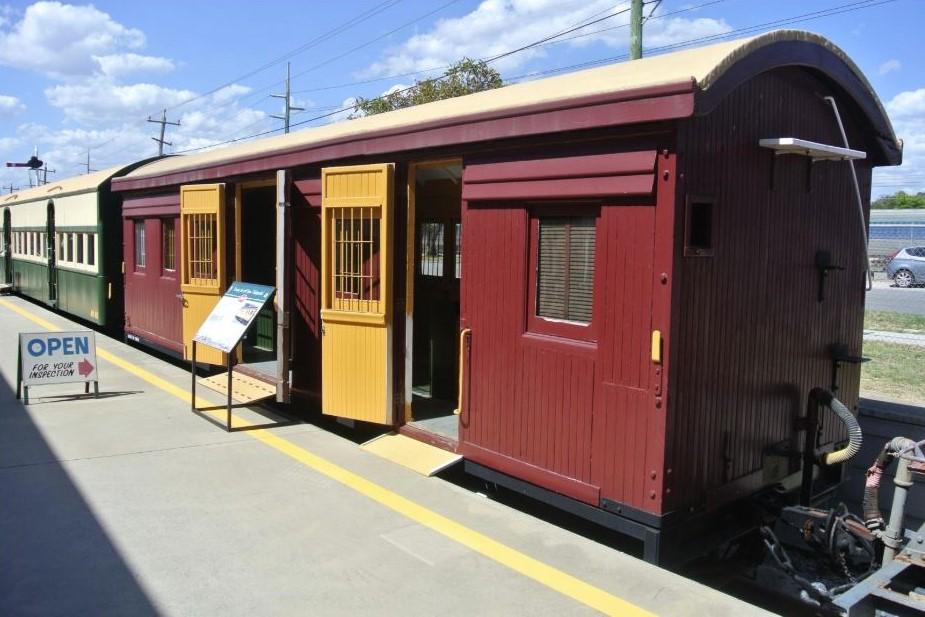
Bullion van VY 4999, one of three bullion vans used to transport gold in Western Australia. Currently on display at the Railway Museum, Bassendean.
Credit: Rail Heritage Western Australia
Having a gap between large deliveries allowed us to refine gold in stages, using the same furnace for different processes. The efficient use of furnaces meant we could successfully refine gold in this relatively small space for ninety one years.
A new refinery
In the early 1980s improvements in gold exploration and extraction methods rapidly increased gold deliveries. We began receiving weekly shipments from the mines. This meant operations in the Melting House needed to become continuous rather than staged, which our Melting House couldn't accommodate.
Basically, we had too much gold! What a great problem to have! So, we built a new refinery out near the airport which opened in 1990. This has dramatically increased our refining capacity and has also improved the comfort and safety of our workers.
Melting House conditions
When the Mint opened, the men who worked in this room dealt with extremely harsh conditions. With fifteen furnaces blazing at the same time, temperatures reached up to 55 degrees Celsius!
Gold Pourers only had a leather apron to protect against the intense heat of the furnaces. Cotton fabric wrapped around their hands offered little protection from the hot molten gold.
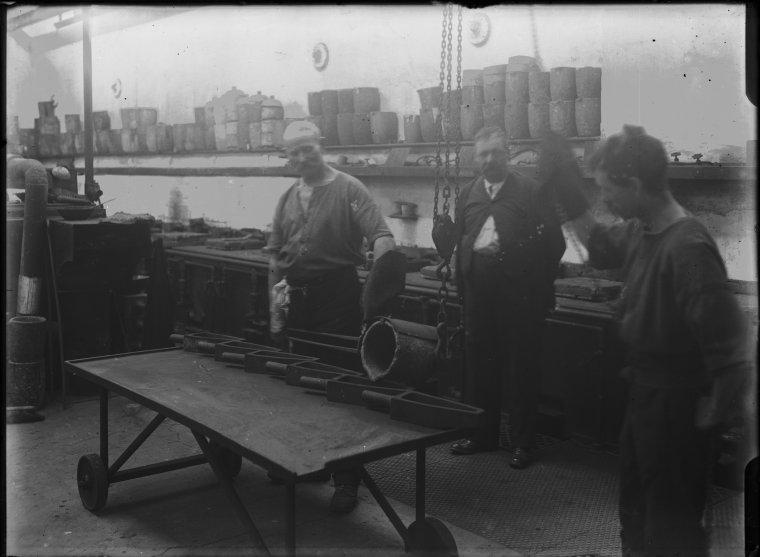
Pouring the gold into moulds, 1919
Credit: State Library of Western Australia <b2990171_4>
Today we wear fireproof clothing and over that a silver Kevlar apron, sleeves, and gloves. Kevlar is an incredibly strong byt lightweight, flame-resistant material.
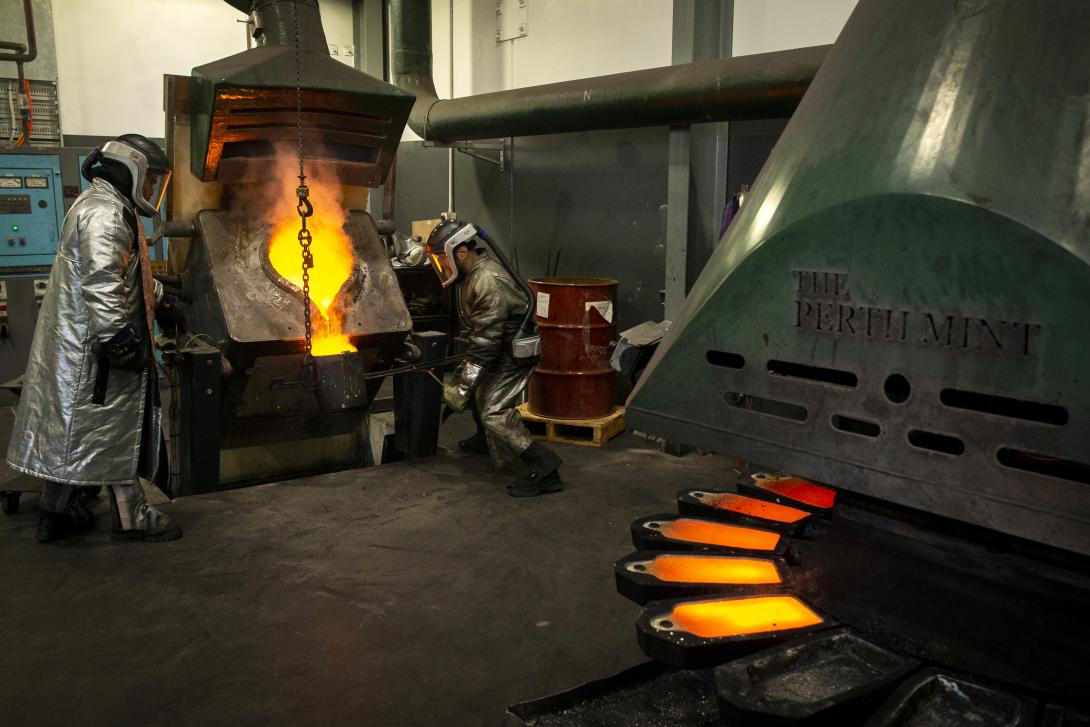
Personal protective equipment worn by Gold Pourers today
Credit: The Perth Mint
Refining gold
The process of mining gold from the ground and turning it into a pure gold bar is complex. Most gold mined today is microscopic gold dust. One tonne of ore usually contains just two or three grams of gold dust!
Mining companies crush, grind, and process the ore to start to separate out the gold.
They produce low purity gold bars called doré, or rough gold. Doré is 60-90% gold. The doré bars are sent to our Refinery to be further refined - removing impurities such as silver and other non-precious metals.
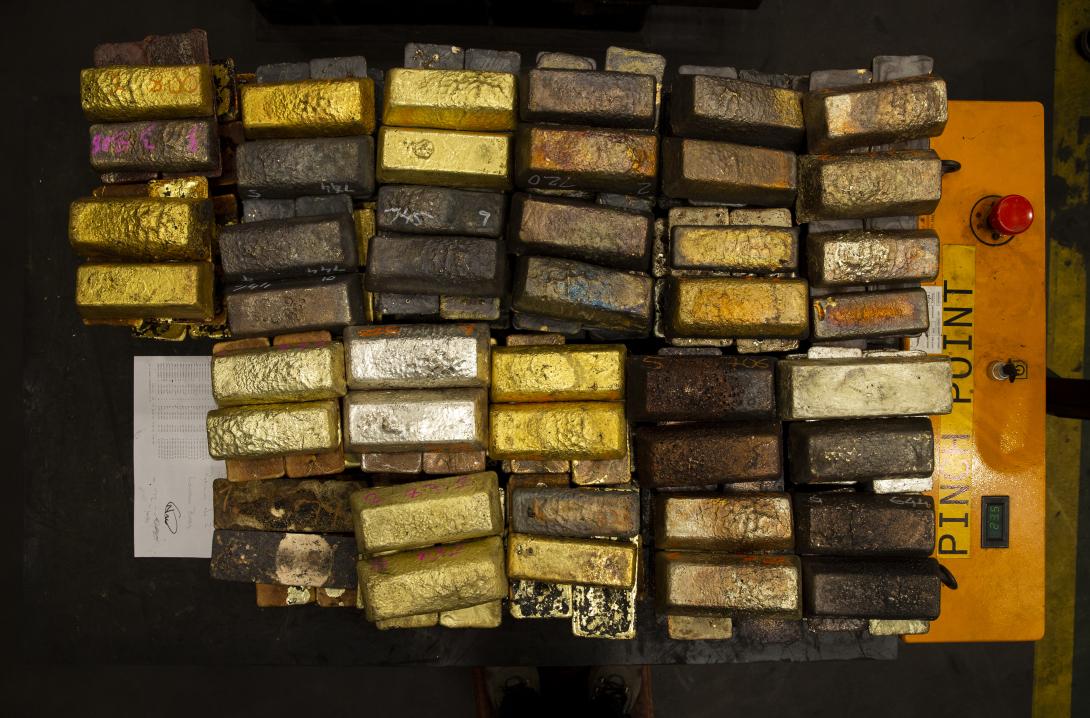
Gold doré, or rough gold bars
Credit: The Perth Mint
Miller refining process
The gold refining process first used in this Melting House was the Miller process, invented by British Assayer Francis Bowyer Miller in 1867 while working at the Sydney Branch of the Royal Mint.
Miller's process involves passing a stream of chlorine gas through molten impure gold. This requires a temperature of at least 1064 degrees Celsius to melt the gold. At this hot temperature, the contaminant metals react with chlorine to form chlorides that separate easily from the gold.
The more reactive contaminant metals like zinc, iron, and copper combine quickly with chloride to form gases that escape from the molten gold. These pollutants are recovered via our exhaust extraction system.
Silver, a more stable metal, reacts with the chlorine last to form silver chloride. As silver chloride is less dense than gold, it forms as a layer on top which is easily scraped off.
The result is 99.5% pure molten gold that can be cast into bars.
New refining technology
We have recently installed new technology at our Refinery that uses Acidless Separation to refine our gold to a purity of 99.5%.
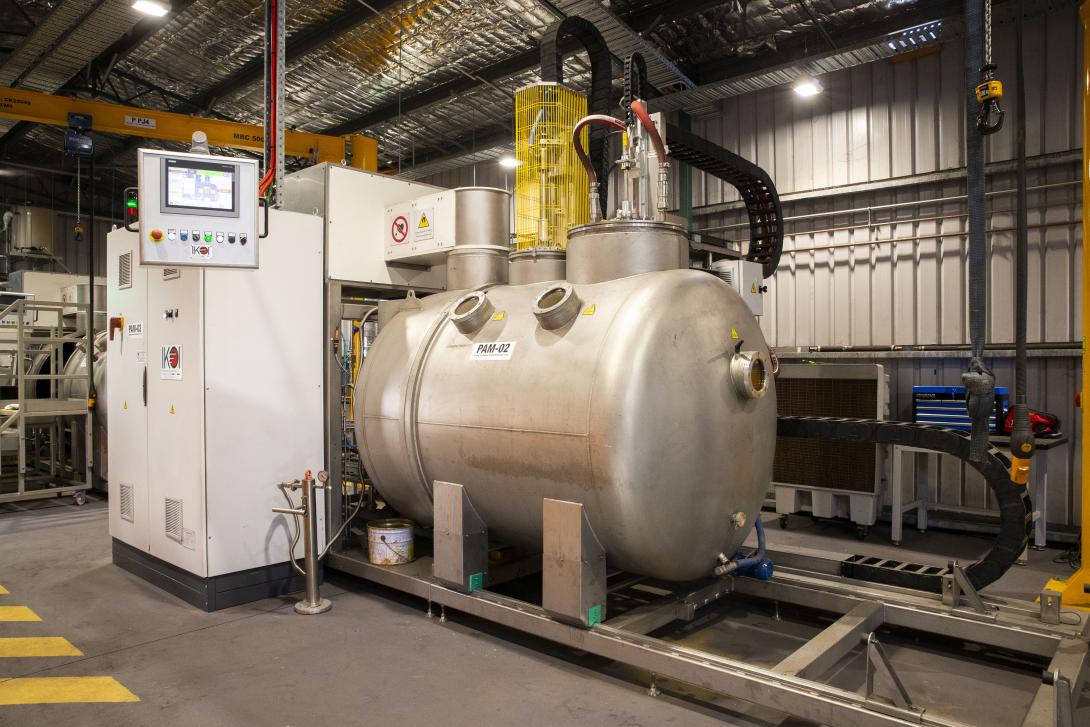
Acidless Separation unit at The Perth Mint Refinery
Credit: The Perth Mint
Doré is melted under vacuum in an enclosed chamber and evaporation separates gold from other metals in the doré. This removes the large-scale use of chlorine gas.
With zero chemical emissions, Acidless Separation is making our processes more environmentally friendly. The new units are also safer for operators. The enclosed chamber removes traditional gold pouring, reducing worker exposure to hot molten metal.
The Gold Pour
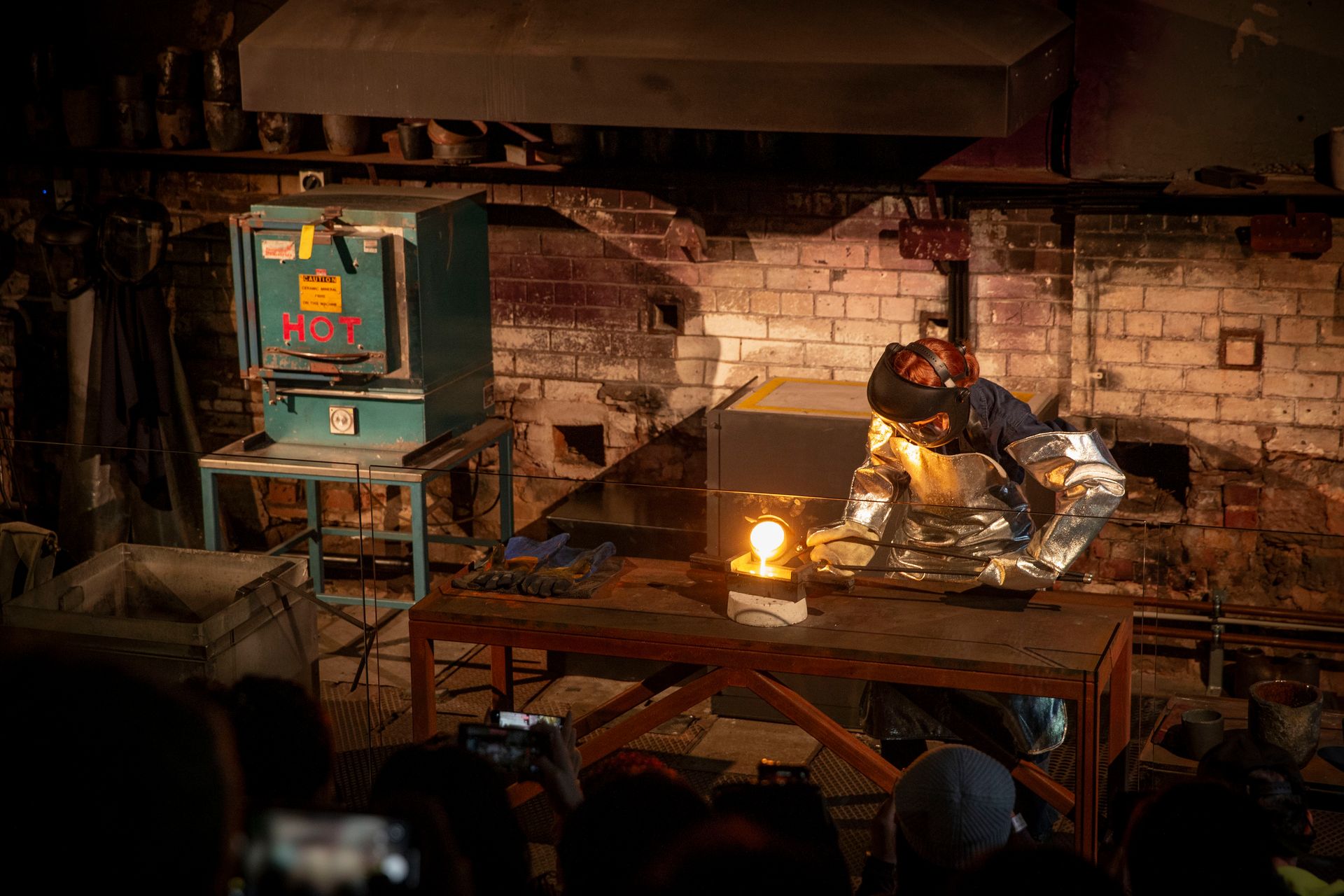
Today, you will be witnessing a demonstration of the traditional gold pouring method that was used for more than 125 years here at The Perth Mint. Your Gold Pourer will be casting 4.5 kilograms of 99.99% pure gold into a gold bar right in front of you!
The gold is currently inside the furnace in liquid form. It is contained in a crucible – or pot - which is made from a combination of clay and graphite.
The crucible is designed to withstand temperatures of up to 1600 degrees Celsius! These crucibles only last about two weeks before the heat degrades them, and they start to fall apart.
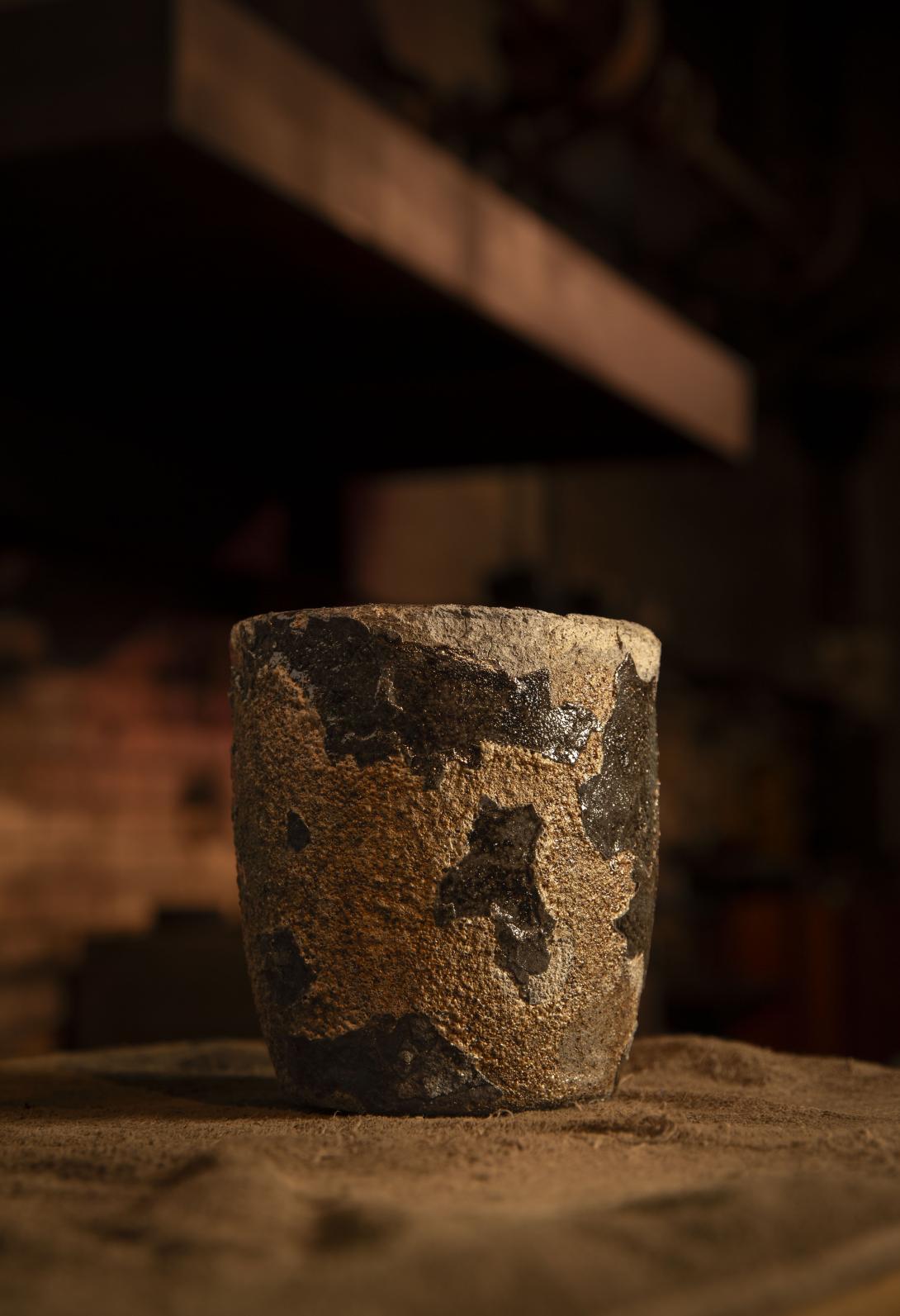
Credit: The Perth Mint
Although gold melts at a temperature of 1064 degrees Celsius, we set our furnace to a higher temperature of 1200 degrees Celsius. We heat the gold higher than its melting point to give our Gold Pourer time to pour the molten gold into the cast iron mould before it solidifies.
Gold is a very good conductor of heat and melts very quickly. However, it also cools down quickly as well! At a temperature of 1200 degrees Celsius, your Gold Pourer will have just 90 seconds to complete the gold pour!
Gold Pour Demonstration explained
Your gold pourer will turn off the lights in the Melting House for the demonstration, so you are better able to appreciate the hot glow of the molten gold. Please listen carefully as each of the steps involved in the gold pour is described:
The Gold Pourer will shut down the furnace. They will then need to work quickly to make sure the gold is poured smoothly.
Using the tongs, the Gold Pourer will retrieve the crucible that contains the molten gold from the furnace.
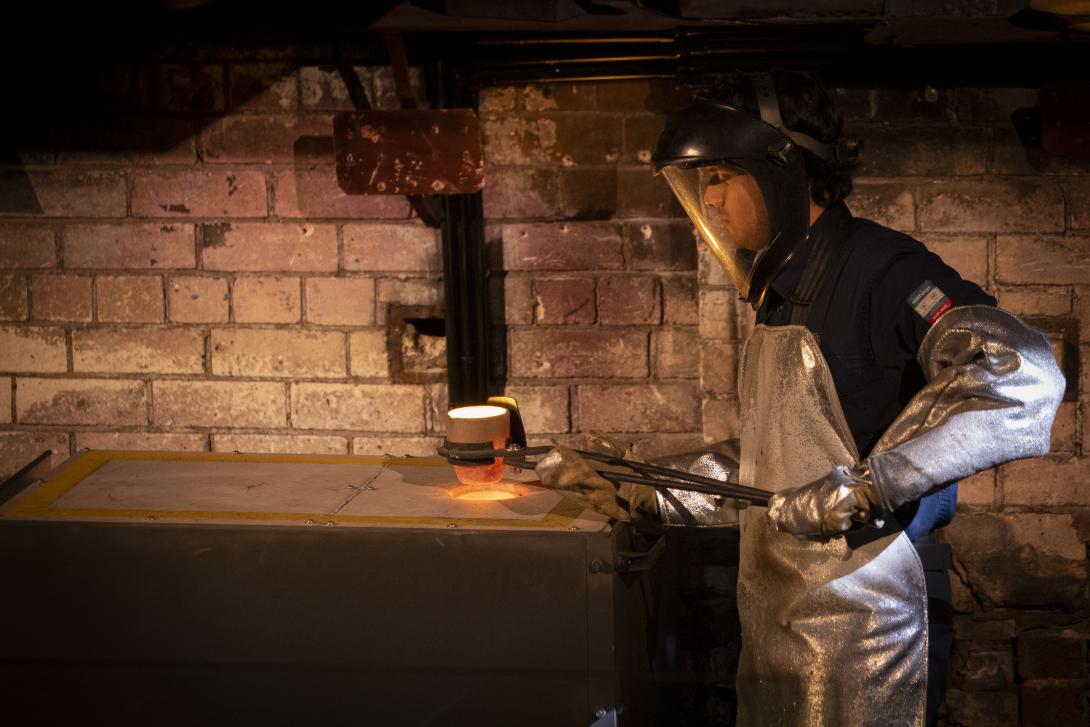
Then they pour the gold straight into the heated cast iron mould on the table.
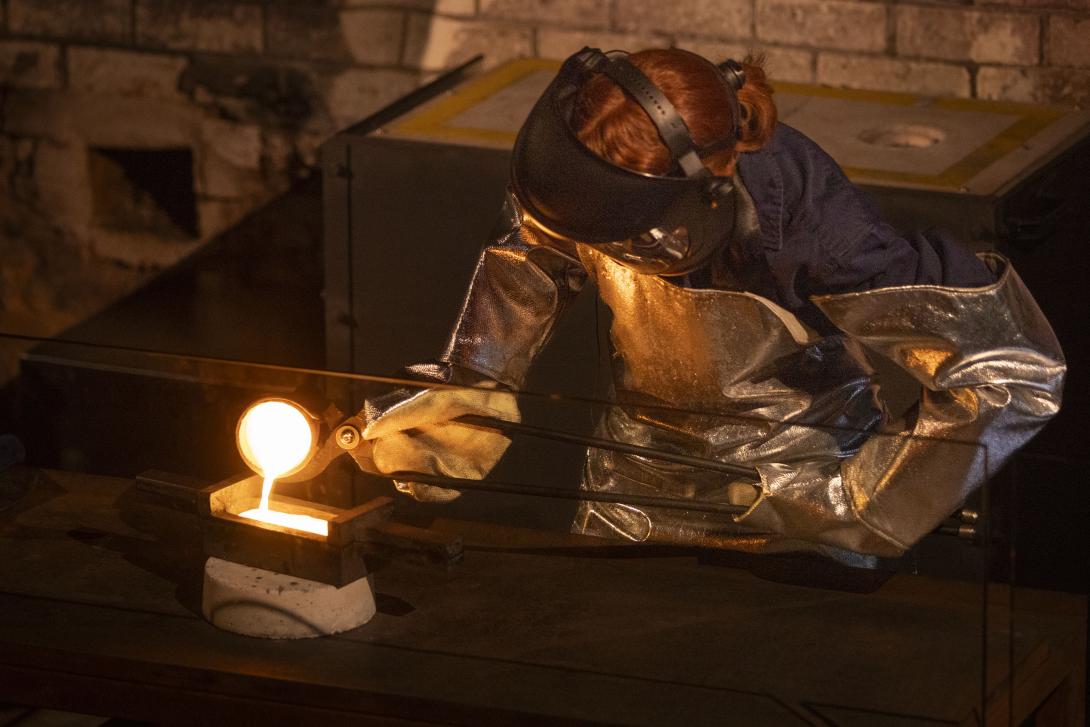
Once the gold sets hard – or goes off, as we call it - it is flipped out onto a tray.
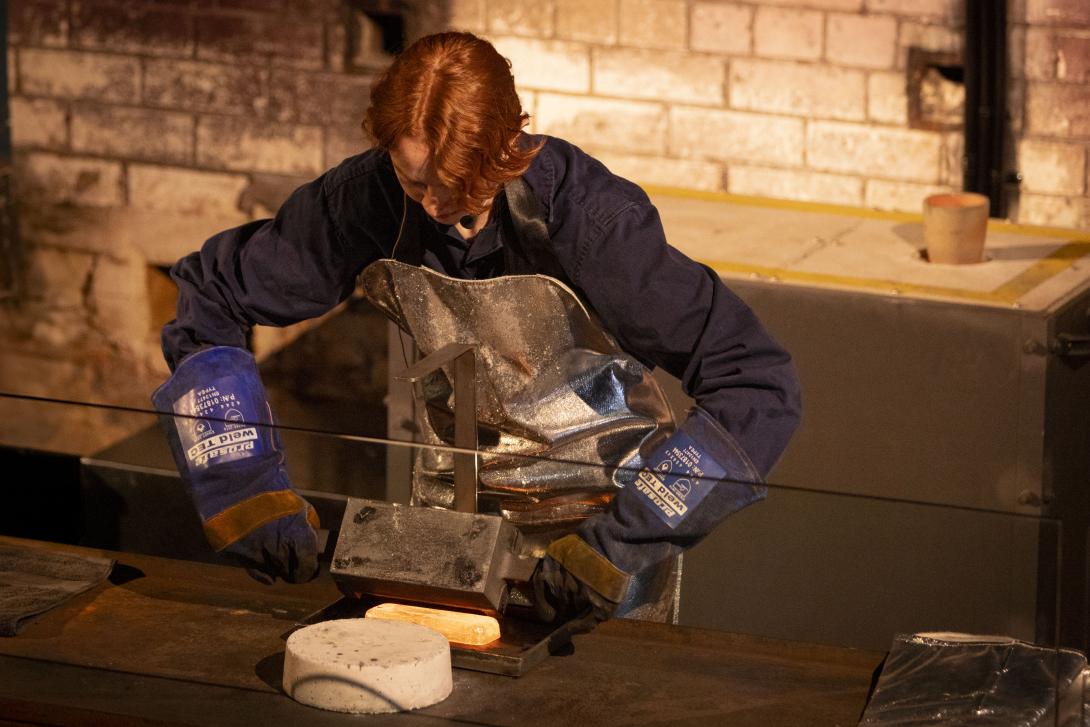
At this stage, the gold is still very hot.
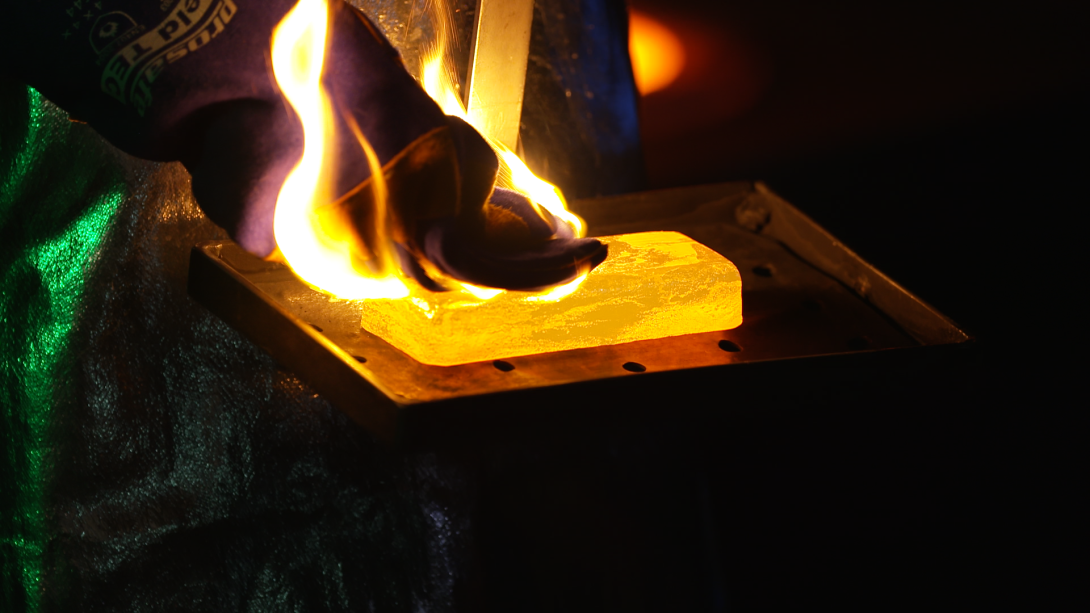
To speed up the cooling process, it is placed into a tank of water.
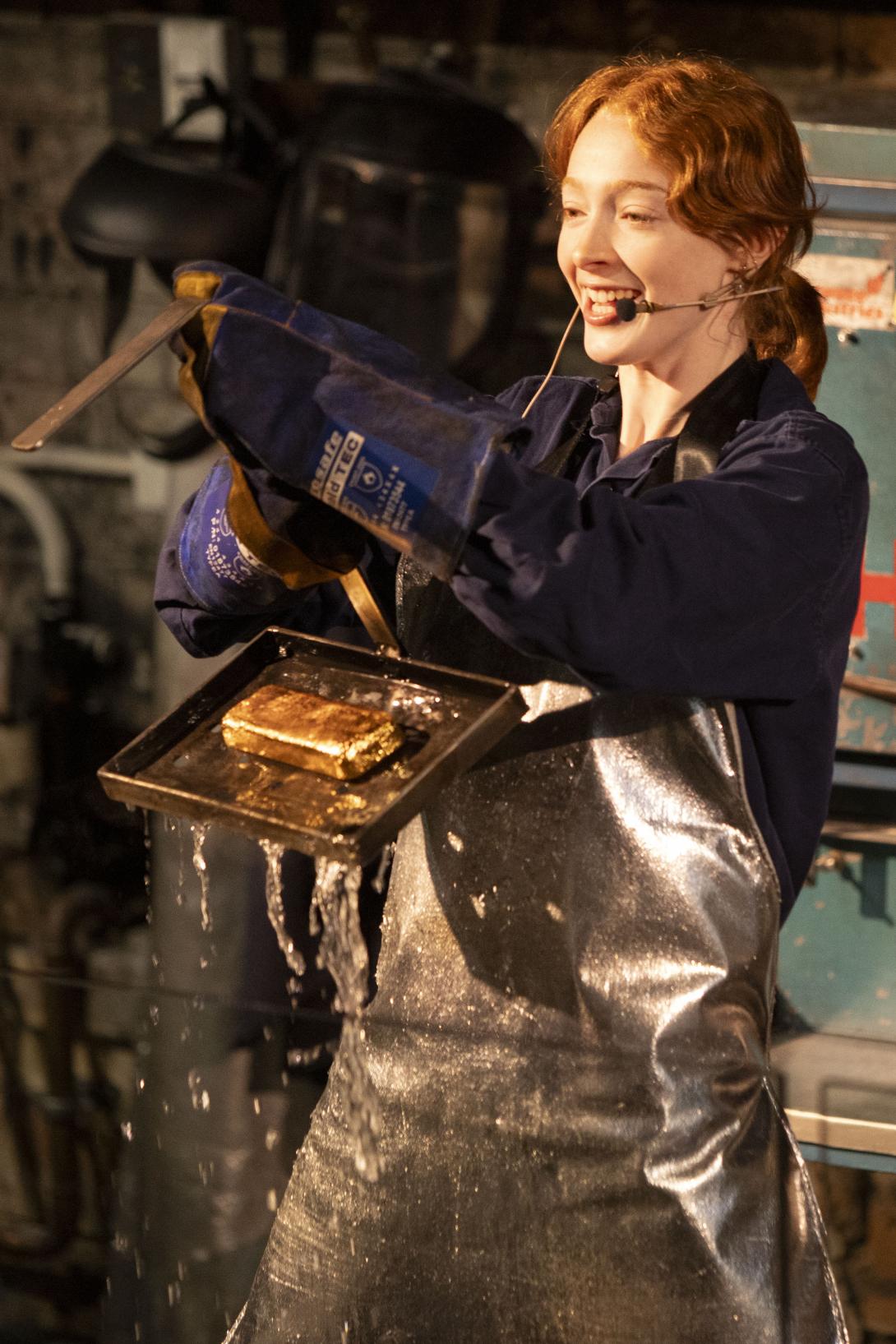
After about 2 minutes, the bar is at room temperature, and it can then be safely removed from the water.
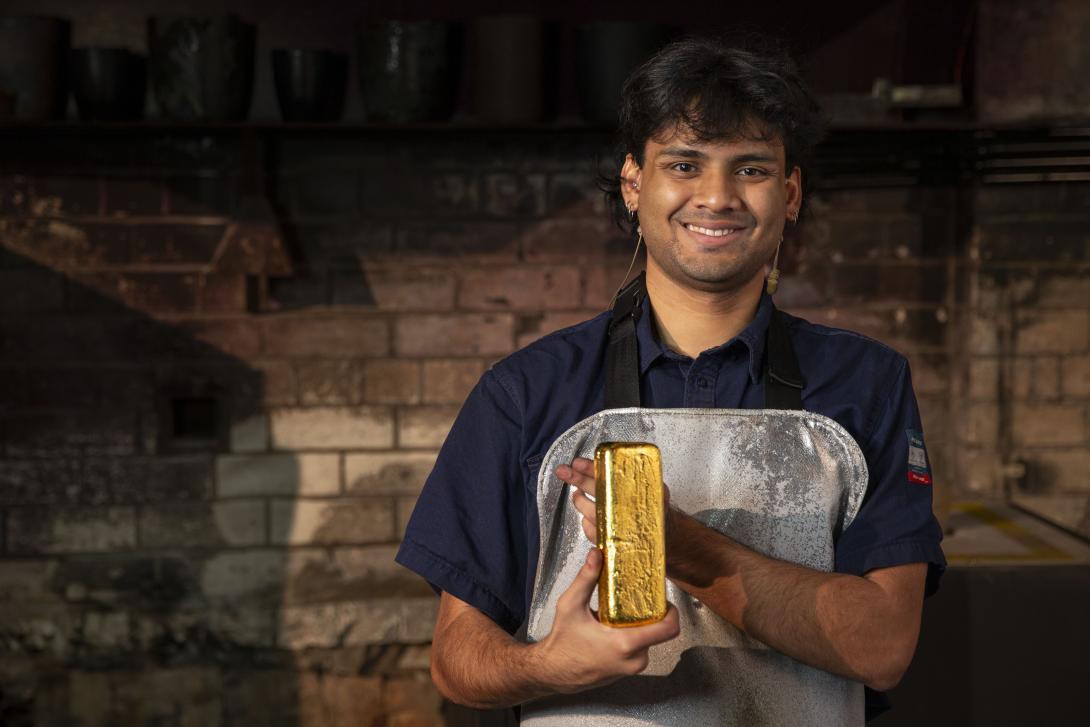
A bar of pure gold!
The cast gold bar produced by your Gold Pourer weighs 150 ounces, or 4.5 kilograms. It is made of 99.99% pure gold and is worth more than AUD 770,000using the current gold price.
If we wanted to sell this gold bar, it would need to have three stamps added to it:
• The first is the Perth Mint logo: the black swan. This stamp identifies where the bar was produced.
• The second is the weight: this bar is 150 troy ounces. Troy ounces are used in metal accounting – 1 troy ounce equates to 31.1 grams.
• Lastly, an assay mark: This indicates the purity of the bar. This bar is 99.99% pure gold so it would be stamped with four nines, 9999.
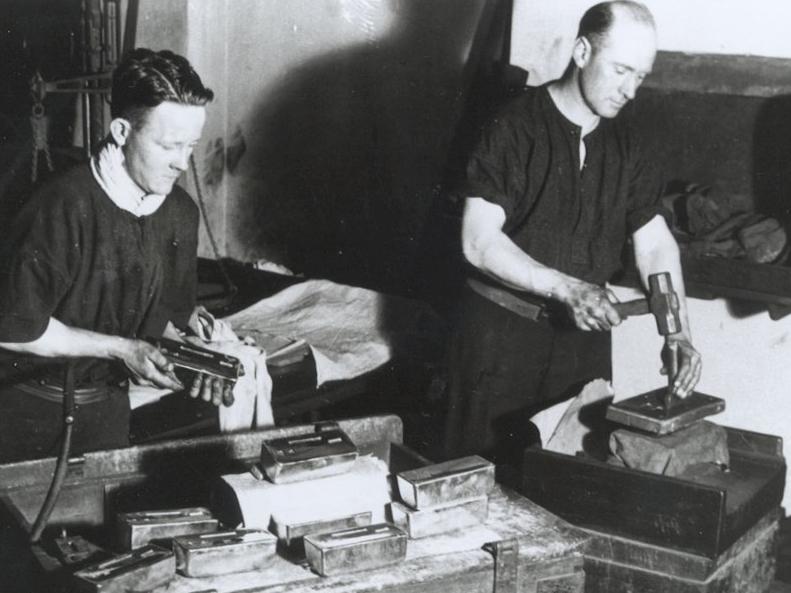
Stamping 400 ounce gold bars
Credit: The Perth Mint
Why don’t we refine to 100% purity? It’s because it’s impossible! Technological advances have not yet been able to remove all trace elements of materials from gold.
In 1957 Refinery Officer, Leo Hickey, and Senior Craftsman, Alexander Osborne, produced a proof ‘plate’ of nearly six nines purity, as measured by the Worshipful Company of Goldsmiths in London. That’s almost 99.9999% pure!
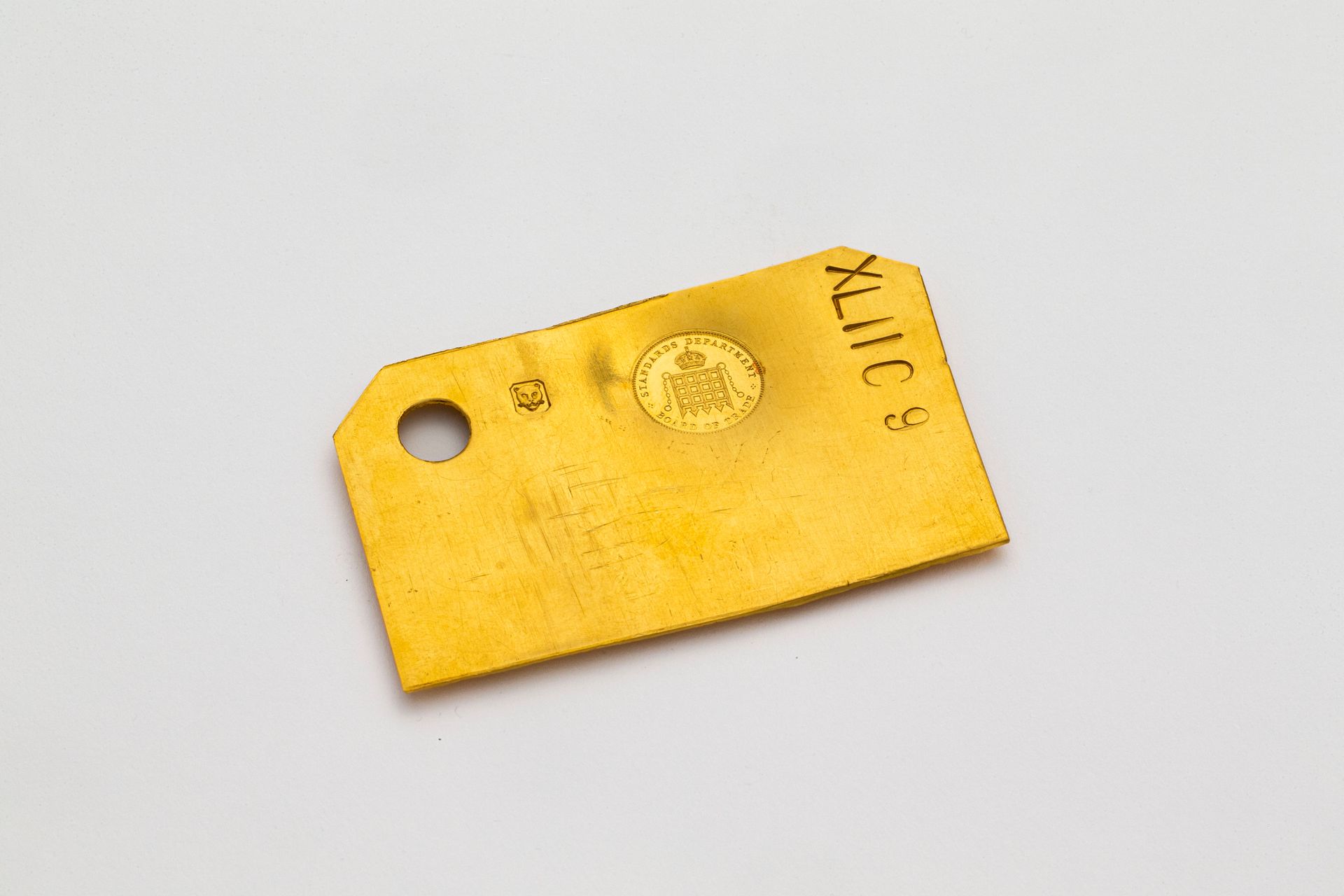
Gold Trial Place 42C
Credit: The Perth Mint
Our hardworking gold bar
Unfortunately, for security reasons, we do not let you hold this gold bar. Our gold bar will be melted down at least 42 times in the coming week. Gold is recyclable, it does not get any less pure when it is melted down over and over again.
If you want to get your hands on some real gold, you can try lifting our 400 ounce, or 12.4 kilogram, bar in the vault.
Thank you for joining our live gold pour demonstration. Please continue your visit by exploring more of The Perth Mint Gold Exhibition at your leisure.
Be sure to pop your blank token into the antique coin press in our Minting Gallery to strike a souvenir of your visit!
We value feedback on your experience with us. If you would like to fill in a review form these can be found on the coin press in the Minting Gallery.