

Collection
The King Henry
Largest gold specimen in existence
The Perth Mint
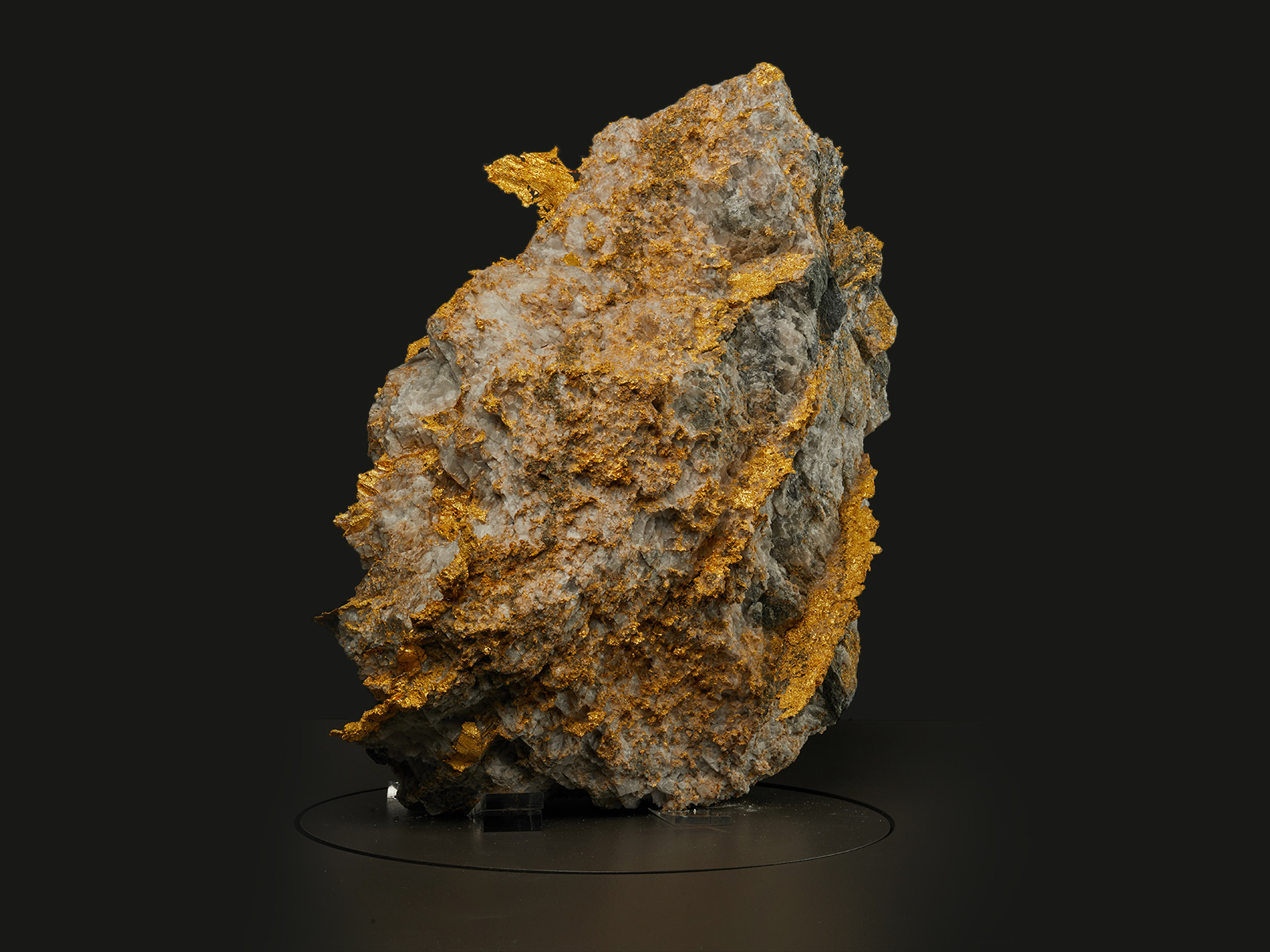
The spectacular King Henry is a 93 kilogram gold and quartz specimen that contains about 1,400 ounces (45 kilograms) of gold. It was discovered in 2018 in the Beta Hunt underground mine in Kambalda, Western Australia, 630 kilometres east of Perth.
Airleg miner Henry Dole, working about 500 meters underground drilled holes and set explosives on Level 15 of the mine, detonating the charges once safely back at the surface. The following day as Dole watered down the dirt and dust he noticed visible gold everywhere. Speaking to the ABC News Dole said "I've been an airleg miner for 16 years. Never in my life have I ever seen anything like this...There were chunks of gold in the face, on the ground...I nearly fell over looking at it...we were picking it up for hours."
The rich vein of gold was called the Father's Day Vein, the day on which it was found. Over the next four days workers brought numerous gold specimens to the surface. The largest specimen found was the impressive King Henry - believed to be the biggest native gold specimen in existence. Overall, the Father's Day vein produced more than 27,000 troy ounces (840 kilograms) of gold!
Discovering such visible gold is a rare occurrence - in most mines gold is only visible through a magnifying glass. Discovering a bonanza zone like this is a once-in-a lifetime occurrence!