

Collection
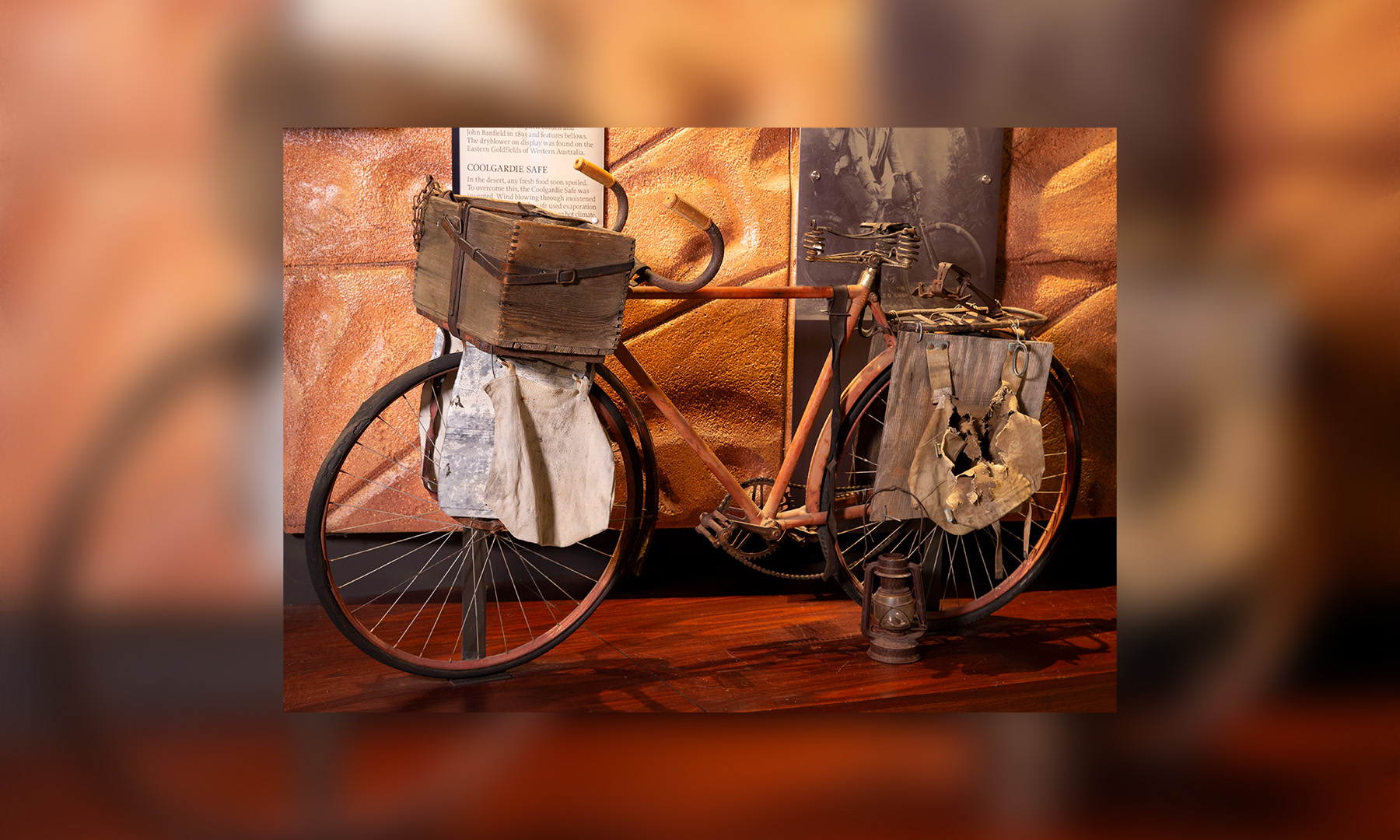
Replica prospector's bicycle
The largest cycle path network in the world!
The Perth Mint
This replica prospector's bike was made and donated to The Perth Mint by the Western Australian Historic Cycle Club. It is similar to bikes used on the Western Australian goldfields from the 1890s until the 1940s.
Such cycles were hugely popular on the goldfields as they were more reliable and faster than horses and camels. They were also cheaper to maintain, eliminating food and water required when caring for animals. This was particularly useful in the dry Western Australian goldfields, where scarce water was sold at exorbitant prices!
The invention of the modern safety bicycle in 1885 and pneumatic tyres in 1888 quickly transformed cycling and brought it to the masses. Bikes, now safer and more comfortable, started appearing on the goldfields in their thousands.
In the late 1890s the per capita ownership of bicycles in Australia was highest in Western Australia with the goldfields said to have the biggest bicycle path network in the world!
Prospectors hung their tools, swag and other kit on the bike and could travel quickly to new find sites.
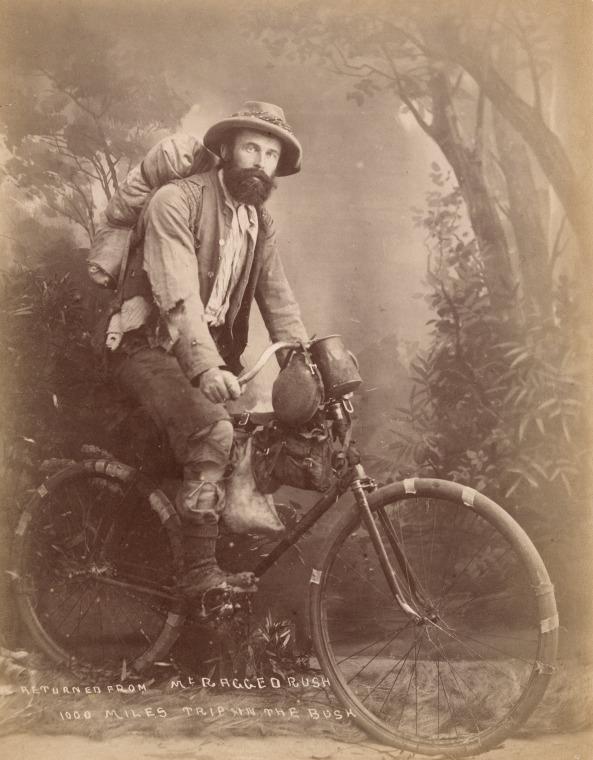
Returned from Mt. Ragged Rush, 1000 mile trip in the bush
Credit: Hemus & Hall, State Library of Western Australia <b2256216_2>
Bicycle delivery services commenced in 1893, which ranged from casual orders to the formation of major delivery networks. Cycle messengers were also popular and could cover 160km in a day - the quickest way to deliver urgent messages before telegraph lines and regular mail services were established.
Dried salt lakes provided excellent cycling surfaces as did paths smoothed out by large camel trains that were used to transport goods to the goldfields.