

From a Lighthouse in North Western Australia
Story
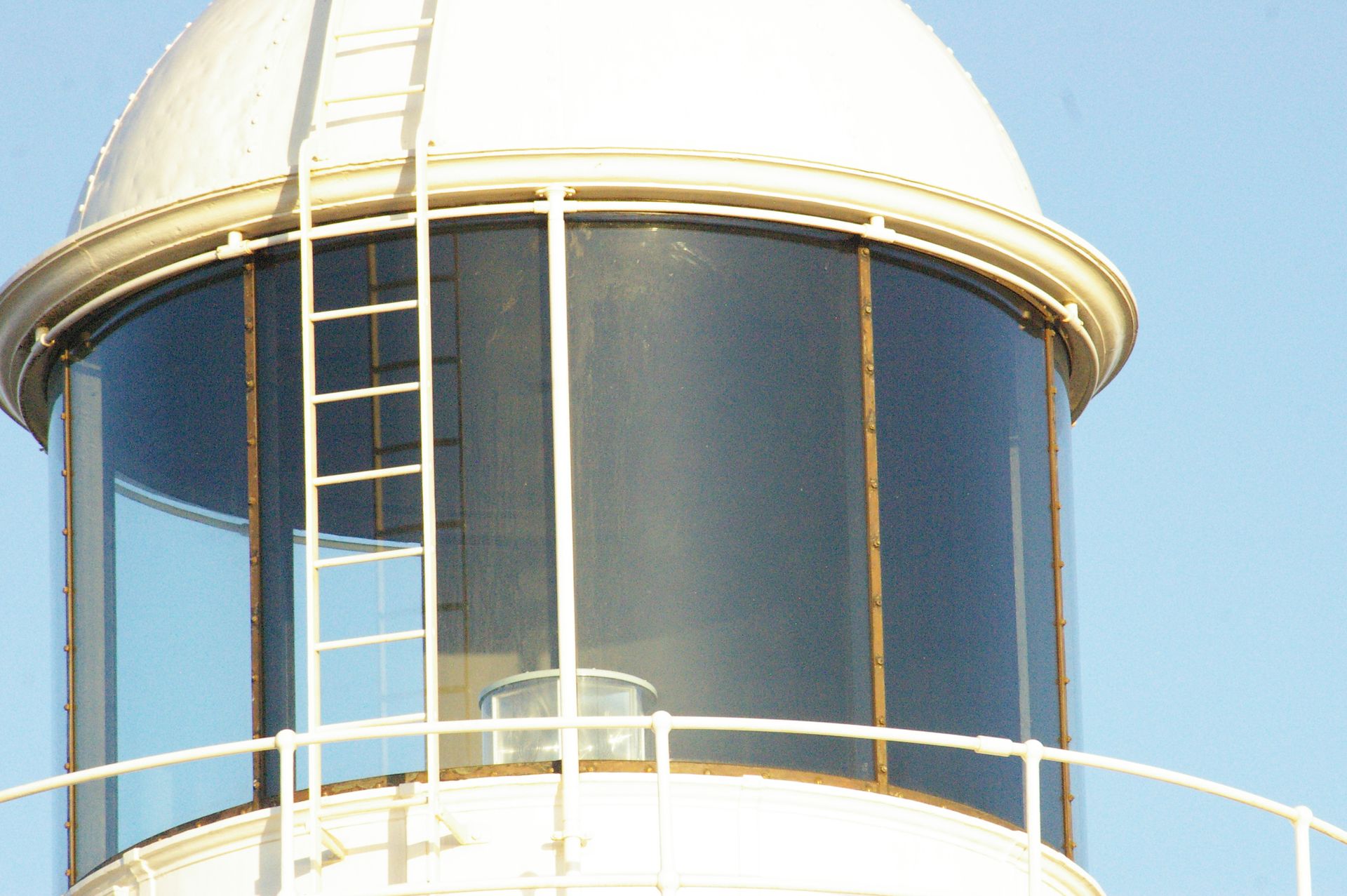
Cape Leveque Lighthouse
Guiding seafarers to safety - the story of lighthouses
Rocket910, licensed under CC BY-SA 4.0
Lighthouses have a very long history. Ever since people have been putting to sea there has been a necessity to indicate where danger may lie, especially at night in low visibility. Most early lights were just beacons lit on dangerous areas of the coast. Consequently, the light could only be seen over short distances in good weather.
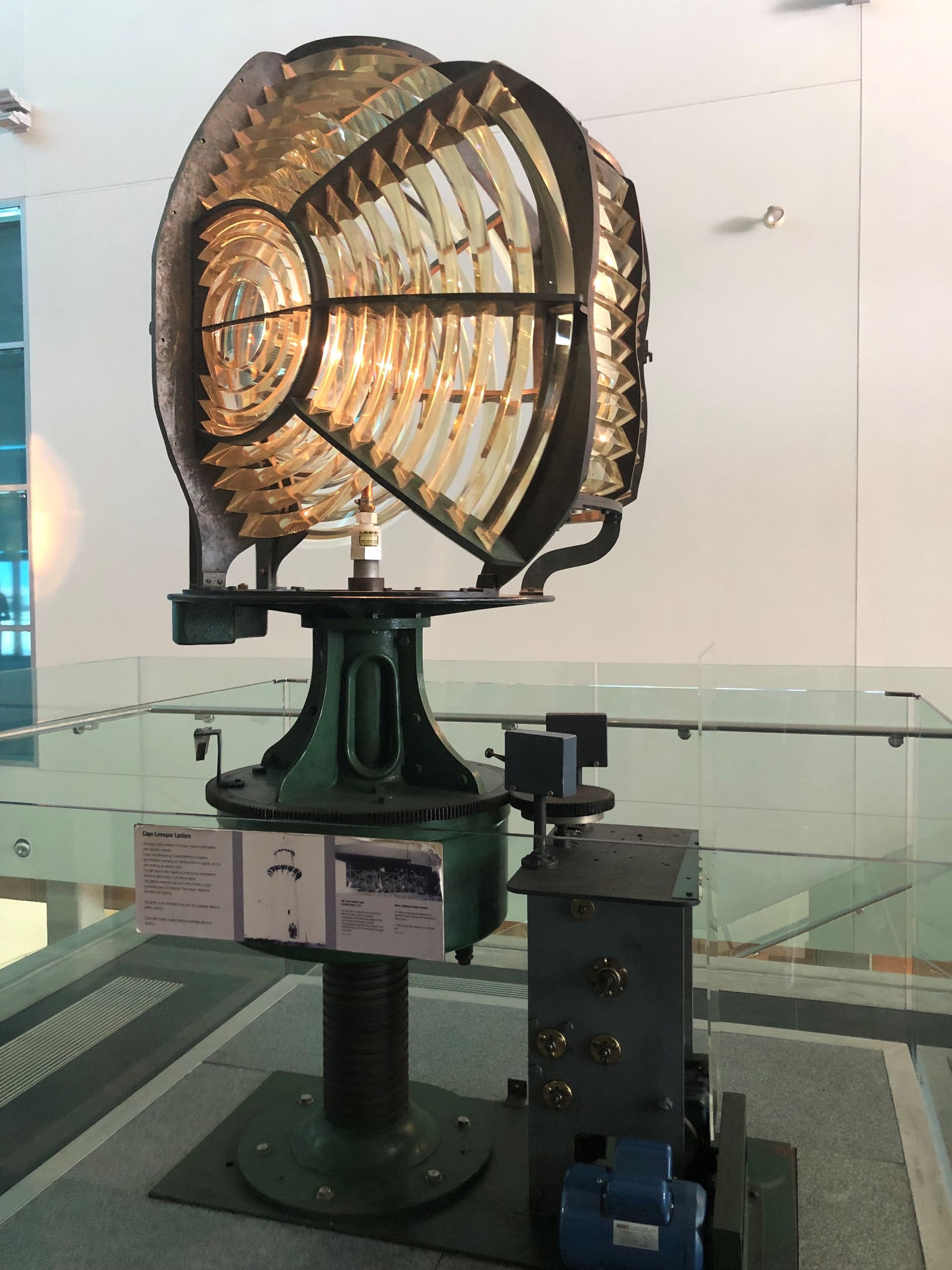
This is the lamp and rotation gear from the Cape Leveque Lighthouse. The Cape Leveque lighthouse was built in 1911 to provide a warning to mariners of the dangers in that area of the northwest coast. This light has a Fresnel lens, an optical device designed to intensify and project light over long distances, protected from wind and rain in a mounting on the top of the light tower.
Although the lighthouse is still working, it became an automated station in 1985. You may be wondering what the two levers are for, the ones that are pushed up and down by the brass block as the lamp rotates. When first installed the lamp was rotated by clockwork, a bit like the chain gear in an old-fashioned grandfather clock. What happened was that two cables attached to the levers would move up and down with the rotation and ring a bell in the lighthouse keeper’s watch room. When the lamp stopped rotating the bell stopped ringing, and the keeper would go up to the light room and reset the weights to start the process over.
MAKE IT YOUR OWN
The story continues.
THERE’S ALWAYS MORE TO DISCOVER